Defensive Shifts: Saving 10+ Runs Over 162 Games

In modern baseball, every advantage counts. One of the most impactful strategies gaining traction is the intelligent use of defensive shifts. Implementing a well-thought-out defensive shifts strategy can dramatically alter game outcomes, potentially saving a team 10 or more runs over a grueling 162-game season. This isn’t just about moving a player a few feet; it’s a sophisticated chess match played out on the diamond, leveraging data and anticipating hitter tendencies to gain an edge.
Understanding and executing these strategic changes requires keen observation, advanced analytics, and a willingness to break from traditional defensive alignments. Teams that master this aspect of the game often find themselves with a significant competitive advantage. By proactively placing fielders where the ball is most likely to go, managers can turn potential hits into outs, thereby preventing runs and improving their team’s overall pitching performance and win-loss record.
Understanding the Basics of Defensive Shifts Strategy
A defensive shifts strategy fundamentally involves repositioning fielders from their standard locations to cover areas where a particular batter is most likely to hit the ball. This move is typically based on extensive data analysis of a hitter’s tendencies, such as pull rates, spray charts, and historical contact points. For instance, a batter known for consistently pulling the ball to the right side of the infield will face a defense that has concentrated more fielders on that side, often leaving the opposite side sparsely covered.
The primary goal is to increase the probability of an out by reducing the amount of open space available for a batted ball to land safely. While it might seem counter-intuitive to leave a part of the field open, the statistical likelihood of a batter hitting into that specific open space is deemed lower than the likelihood of them hitting into the shifted area. This strategic gamble is calculated and rooted deeply in sabermetrics, transforming how teams approach defense.
Effective defensive shifts strategy isn’t a one-size-fits-all solution; it’s dynamic and constantly evolving. Teams must adapt their shifts not only to individual batters but also to game situations, pitcher tendencies, and even weather conditions. The success of these shifts relies heavily on accurate scouting reports and real-time adjustments made by the coaching staff. It’s a continuous learning process, where every batted ball provides new data to refine future positioning.
The Power of Infield Overlaps Against Pull Hitters
One of the most common and effective defensive shifts strategy involves infield overlaps, particularly against strong pull hitters. When facing a right-handed batter who consistently pulls the ball to the left side, or a left-handed batter who pulls to the right, the infielders will significantly shift their positions. For a left-handed pull hitter, the second baseman might move into shallow right field, the shortstop might play closer to second base, and the first baseman may play deeper, creating a wall on the right side of the infield.
This strategic alignment aims to take away potential groundball singles and hard-hit line drives that would typically find gaps between traditional infield positioning. By crowding one side of the infield, teams force the hitter to either adjust their approach and try to hit to the opposite field, which often results in weaker contact, or hit directly into the heavily guarded area. The risk, of course, is that a well-placed bunt or an opposite-field hit could result in a base runner, but the data often supports the high reward of this aggressive positioning.
The impact of this specific defensive shifts strategy can be substantial. By converting just a few potential singles into outs per month, a team can prevent dozens of base runners over a season. Each prevented base runner directly correlates to a reduction in scoring opportunities for the opposition, thus saving runs. This proactive approach to defense is a cornerstone of modern run prevention, maximizing the chances of an out on ground balls and low line drives.
Outfield Positioning Adjustments for Gap Power
While infield shifts grab most of the headlines, strategic adjustments in outfield positioning are equally crucial for a comprehensive defensive shifts strategy. Many power hitters are known for hitting doubles and triples into the gaps, rather than consistently hitting home runs. By studying a hitter’s spray chart and identifying their preferred gap, outfielders can be repositioned to cut off these extra-base hits. For example, against a batter who frequently drives the ball into the left-center gap, the center fielder might shade more towards left-center, and the left fielder might play deeper and slightly more towards center.
This subtle but significant shift aims to turn potential doubles into singles, or even turn deep fly balls into outs rather than extra-base hits. The difference between a double and a single can be a run scored, especially with runners on base. By taking away these extra-base opportunities, teams can drastically reduce the number of runs allowed over the course of a season. It requires outfielders with good range and the ability to read batted balls effectively, but the data-driven placement is the initial key.
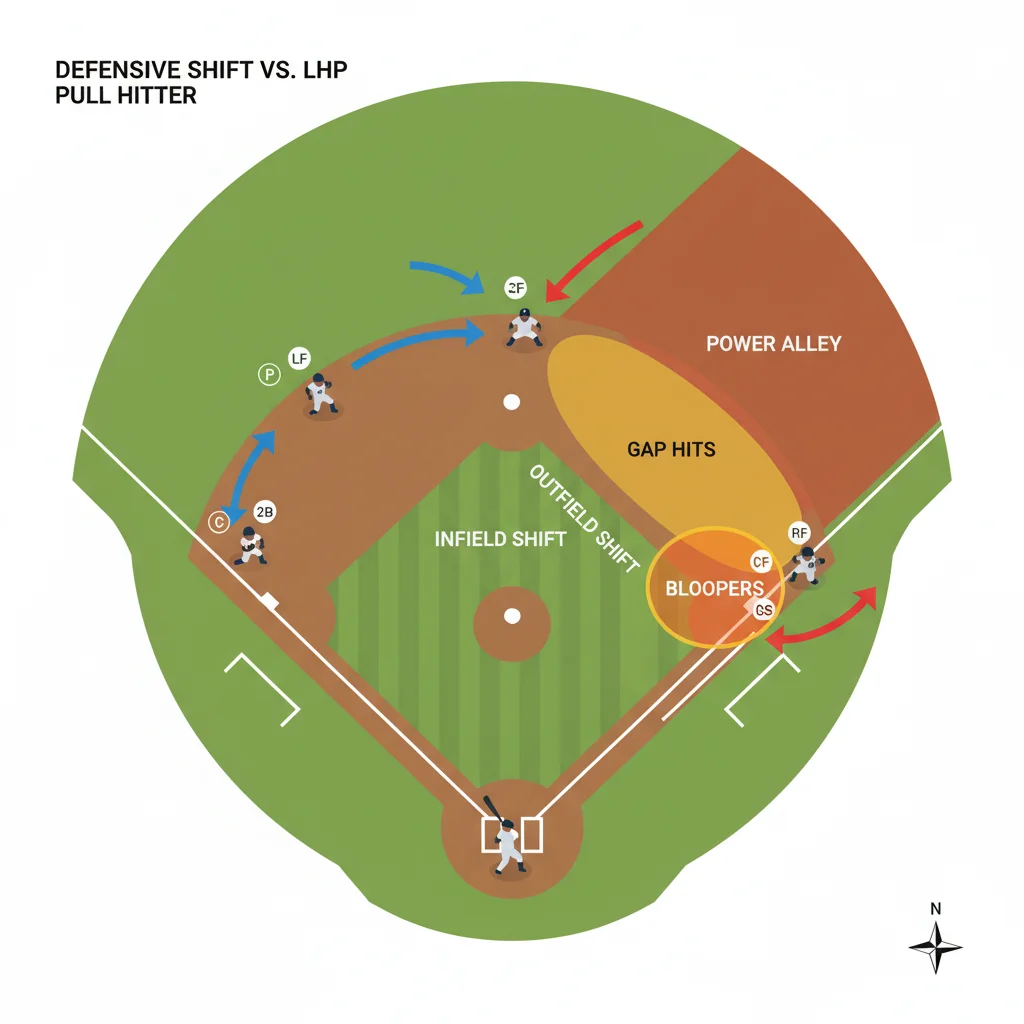
Furthermore, outfield shifts can also involve playing deeper or shallower based on a batter’s typical contact point and the speed of the runners on base. A fast runner at first might prompt a deeper outfield to prevent a single from turning into a score on a double. Conversely, a slow runner might allow for a shallower outfield to cut off potential bloop singles. These nuanced adjustments are vital components of an effective defensive shifts strategy, contributing significantly to run prevention and overall team success.
Strategic Catcher Positioning and Framing
Beyond the fielders, the catcher’s role in a defensive shifts strategy is often underestimated but profoundly important. Strategic catcher positioning involves more than just setting up for the pitcher; it’s about anticipating where a batter might foul tip a ball, or where a pitch might be missed. By subtly adjusting their stance or depth, catchers can better block pitches in the dirt, preventing wild pitches and passed balls that allow runners to advance or score. This proactive positioning saves runs by limiting free bases and preventing opponents from capitalizing on mistakes.
Another critical aspect is pitch framing, which, while not a traditional ‘shift’ of position, is a strategic skill that directly impacts the strike zone and, consequently, the number of pitches thrown and the outcomes of at-bats. A catcher’s ability to subtly ‘steal’ strikes by framing pitches on the edge of the zone can lead to more strikeouts, fewer walks, and quicker innings. More strikeouts mean fewer balls in play, which inherently reduces the chances of a hit or an error, directly saving runs.
Key Catcher Contributions
- Blocking Pitches: Preventing wild pitches and passed balls that allow runners to advance or score.
- Framing Pitches: Influencing umpire strike calls, leading to more strikeouts and fewer walks.
- Anticipating Fouls: Positioning to catch foul tips, turning potential pitches into outs.
- Managing Baserunners: Quick throws to deter or pick off baserunners, preventing stolen bases.
These actions, though seemingly small, accumulate over 162 games. A catcher who consistently saves a few pitches per game, or prevents one wild pitch per week, contributes significantly to the overall run prevention efforts of a team. This makes the catcher an integral part of any comprehensive defensive shifts strategy, impacting the game from behind the plate.
Leveraging Data Analytics for Optimal Defensive Shifts
The foundation of any successful defensive shifts strategy in today’s baseball is robust data analytics. Teams now employ sophisticated software and dedicated analysts to process vast amounts of information about every hitter in the league. This data includes spray charts from previous seasons, exit velocity, launch angle, and even real-time adjustments observed during games. By understanding these metrics, teams can predict with a high degree of accuracy where a batter is likely to hit the ball, enabling them to position their fielders optimally.
This analytical approach moves beyond simple intuition or traditional scouting. It quantifies probabilities and identifies patterns that might not be obvious to the naked eye. For instance, a batter might appear to hit to all fields, but the data might reveal that their hardest-hit balls consistently go to a specific zone, prompting a shift. The continuous refinement of these models allows teams to make increasingly precise and effective defensive adjustments, maximizing their chances of turning batted balls into outs.

The integration of technology, such as Statcast data, provides even deeper insights into batted ball events. Teams can analyze how different pitchers’ repertoires affect a hitter’s contact points, further customizing their defensive shifts strategy for specific pitcher-hitter matchups. This continuous feedback loop of data collection, analysis, and implementation is what drives the effectiveness of modern defensive positioning, translating directly into saved runs and improved win probabilities. The commitment to this data-driven approach is a hallmark of successful baseball organizations.
Frequently Asked Questions
What is the main goal of a defensive shift?
The main goal is to reposition fielders based on a batter’s historical hitting tendencies, increasing the probability of an out by covering the areas where the ball is most likely to be hit, thereby preventing runs.
Are defensive shifts always effective?
While highly effective against certain types of hitters, shifts are not foolproof. A batter can sometimes beat a shift with an opposite-field hit or a bunt, but statistically, the benefits of strategic positioning often outweigh the risks over a long season.
How do teams decide when to use a defensive shift?
Teams decide based on extensive data analysis of each batter’s spray chart, pull rates, and exit velocity. They also consider game situations, such as the score, inning, and runners on base, to optimize their defensive strategy.
Do defensive shifts affect player roles?
Yes, shifts can require infielders to play in unfamiliar positions, sometimes even in shallow outfield, and outfielders to cover more ground. This demands versatility and strong communication among players.
Can offensive teams counter defensive shifts?
Offensive teams can counter shifts by attempting to hit to the opposite field, bunting, or using hit-and-run plays. However, consistently executing these counters against a well-placed shift can be challenging for batters.
Official Resources
- MLB Glossary: Defensive Shift
- Society for American Baseball Research (SABR)
- Baseball Savant: Statcast Data
Conclusion
The strategic implementation of a robust defensive shifts strategy has become an indispensable part of modern baseball. By analyzing hitter tendencies, repositioning infielders and outfielders, and leveraging the often-overlooked contributions of catchers, teams can significantly enhance their run prevention capabilities. The four strategic changes discussed—infield overlaps, outfield adjustments, strategic catcher play, and data-driven analytics—collectively form a powerful framework for saving runs. Over the course of a demanding 162-game season, preventing even a fraction of potential runs per game can translate into a substantial double-digit reduction in total runs allowed, directly impacting a team’s win-loss record and championship aspirations. As the game continues to evolve, the teams that embrace and innovate with these defensive strategies will undoubtedly hold a competitive edge. Understanding and applying these principles is no longer an option but a necessity for success at the highest levels of baseball.