Dominate Your Fantasy Baseball League: Data-Driven Strategies
Ready to gain a competitive edge in your fantasy baseball league? This article unveils four data-driven strategies to help you make smarter decisions, from drafting to in-season management, ensuring you dominate your opponents and secure a championship.
By: Michael Sete on agosto 22, 2026
Are you looking to truly dominate your fantasy baseball league this season? Gaining a significant edge requires more than just gut feelings; it demands a deep dive into data-driven fantasy baseball strategies. By leveraging analytics and understanding key metrics, you can make more informed decisions, from draft day to the final weeks of the season, significantly increasing your chances of success. This guide will walk you through four essential data-driven approaches to help you outsmart your competition and claim that coveted championship title.
Mastering the Draft with Advanced Metrics
The draft is arguably the most critical day of your fantasy baseball season. While many managers rely on traditional rankings, a data-driven approach involves digging deeper into advanced metrics to identify undervalued players and avoid overvalued ones. This means moving beyond simple batting average or ERA and exploring statistics that better predict future performance. Understanding these metrics can give you a significant advantage, allowing you to build a robust roster that outperforms its draft position. It’s about finding the hidden gems and skipping the busts that others might pick based on name recognition alone.
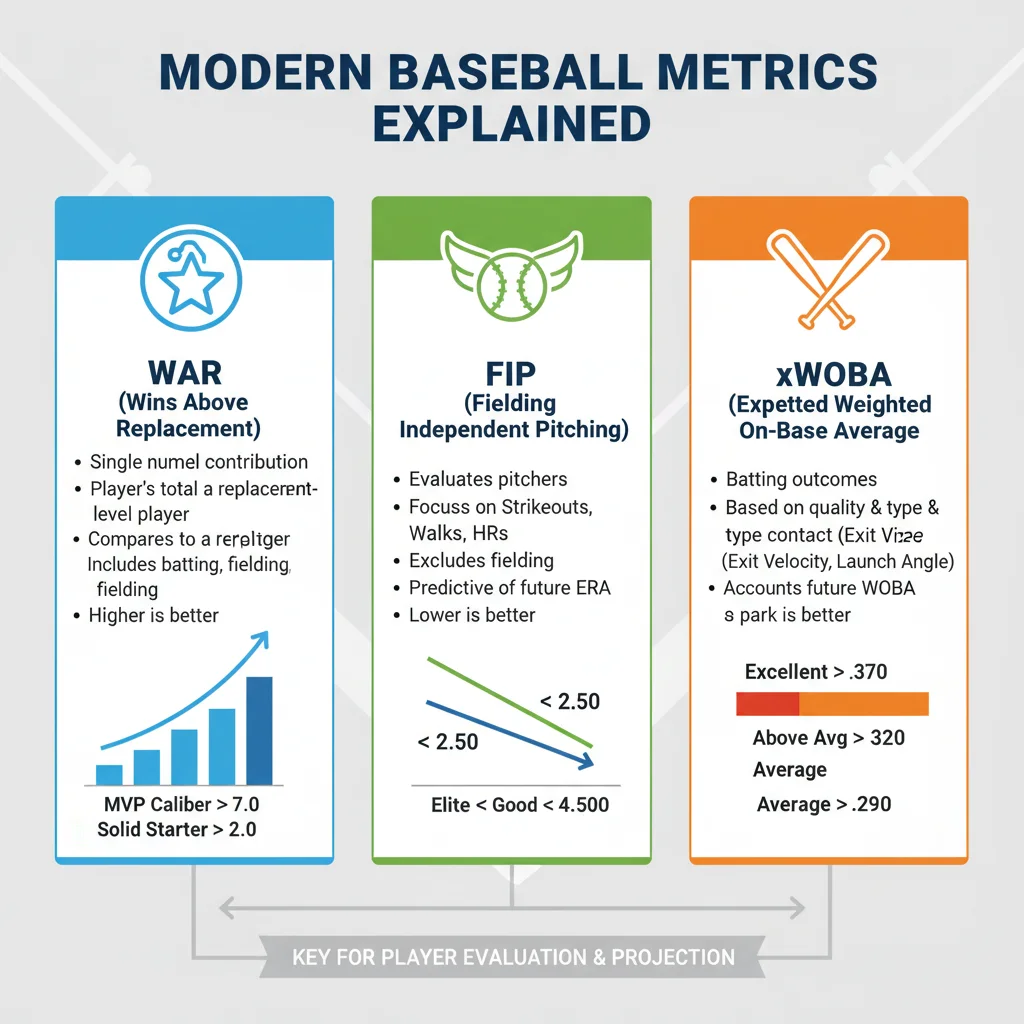
One key aspect of mastering the draft is focusing on underlying skills rather than just past results. For hitters, metrics like xWOBA (expected Weighted On-Base Average) and Hard-Hit% offer a clearer picture of a player’s true offensive talent, as they account for batted ball quality and outcomes independent of defense or luck. For pitchers, FIP (Fielding Independent Pitching) and SIERA (Skill-Interactive Earned Run Average) are far more predictive than ERA, as they isolate a pitcher’s performance from the quality of the defense behind them. By prioritizing these advanced stats, you can identify players whose surface-level numbers might not fully reflect their potential, allowing you to grab them later in the draft for a discount.
Another crucial element is understanding player projections and how different systems arrive at their conclusions. Don’t just pick one projection system; instead, look at a consensus of several reputable sources. This helps to smooth out any outliers and provides a more reliable forecast. Additionally, consider how a player’s situation might change, such as a move to a new team or a shift in their role. A player with strong underlying metrics who is moving to a more favorable park or receiving increased playing time could be a breakout candidate. Conversely, a player whose advanced stats are declining might be a red flag, even if their traditional numbers still look respectable. These insights are invaluable for making savvy draft-day decisions.
In-Season Roster Management Through Data Analysis
The draft is just the beginning; effective in-season roster management is what truly separates the champions from the also-rans. This involves continuously analyzing player performance, identifying emerging trends, and making timely waiver wire pickups and trades. Relying solely on daily box scores can be misleading, as short-term fluctuations can obscure a player’s true capabilities. Instead, a data-driven manager uses advanced metrics to track performance, predict changes, and react strategically to the ever-evolving landscape of the baseball season. This proactive approach ensures your team remains competitive throughout the year.
One effective strategy is to monitor rolling averages of key advanced statistics. For example, instead of just looking at a player’s season-long batting average, track their xWOBA over the last 14 or 30 days. A sudden spike or dip in these underlying metrics can indicate a genuine change in a player’s form, either for better or worse. This allows you to identify potential waiver wire gems before they become widely recognized or to sell high on a player whose recent success might not be sustainable. Similarly, for pitchers, keeping an eye on their K/9 (strikeouts per nine innings) and BB/9 (walks per nine innings) trends, along with their FIP, can help you predict future ERA changes more accurately than just looking at their recent earned run totals. These forward-looking indicators are crucial for staying ahead of the curve.
Leveraging Waiver Wire Analytics
Targeting Pitchers with Increased Velocity: A noticeable bump in fastball velocity can often precede a significant improvement in a pitcher’s strikeout rates and overall effectiveness. Data on velocity changes is readily available and can signal a breakout.
Spotting Hitters with Improved Plate Discipline: Look for players showing a decrease in strikeout rate (K%) and an increase in walk rate (BB%). These are indicators of better plate discipline and often lead to higher on-base percentages and more consistent hitting.
Identifying Players with Positive Batted Ball Luck: While luck isn’t sustainable, a player with a very low BABIP (Batting Average on Balls In Play) but strong underlying metrics (like Hard-Hit% or xBA) is a prime candidate for positive regression, meaning their luck is likely to turn around.
Monitoring Usage and Role Changes: Keep an eye on news and depth charts. A player moving into a more prominent role, like a closer taking over the ninth inning or a hitter moving up in the batting order, immediately increases their fantasy value.
By integrating these analytical approaches into your weekly roster management, you can make proactive decisions that keep your team competitive and exploit inefficiencies in your league. Don’t just react to what’s already happened; use data to anticipate what’s coming next.
Optimizing Trades with Value-Based Analysis
Trading is a high-stakes game in fantasy baseball, and making smart deals can significantly bolster your team’s championship aspirations. Instead of simply swapping players based on name recognition or recent performance, a data-driven approach to trades involves a thorough value-based analysis. This means understanding the true worth of your players and those on other teams, often by comparing their projected rest-of-season performance against what you’d find on the waiver wire or from other trade partners. It’s about creating win-win scenarios where you improve your team’s weaknesses without sacrificing too much strength.
The core of value-based trading lies in understanding scarcity and replacement level. A player’s fantasy value isn’t just about their raw stats; it’s also about how much better they are than the next available player at their position. For example, a top-tier catcher might be more valuable than a top-tier first baseman, simply because there are fewer good catchers in the league. Using tools that assign dollar values or z-scores to players can help you quantify this relative value. This allows you to identify trade targets who might be undervalued by their current owner or to package players whose combined value exceeds that of a single, more dominant player you’re targeting.
Key Considerations for Data-Driven Trades
Positional Scarcity: Prioritize acquiring players at positions with limited depth, such as catcher or middle infield, if your team has a weakness there. Their relative value is often higher.
Category Needs: Identify which specific categories your team needs to improve (e.g., stolen bases, saves, WHIP). Target players who excel in those areas while ensuring you don’t cripple your strong categories.
Performance Discrepancies: Look for players who are performing poorly but have strong underlying metrics (e.g., high BABIP indicating bad luck, low HR/FB rate for a power hitter). These are prime buy-low candidates.
Opponent’s Needs: Understand what other teams in your league need. Offering a player who fills a specific void for them, even if they are not your absolute best player, can facilitate a trade that benefits both sides.
Future Projections: Always consider rest-of-season projections. A player who has had a great start but is projected to regress might be a sell-high candidate, while a slow starter projected for a strong finish could be a buy-low.
By meticulously analyzing these factors, you can approach trade negotiations with confidence, knowing you have a clear understanding of each player’s true value. This data-driven approach helps you avoid emotional decisions and make trades that genuinely push your team closer to a championship.
Leveraging Advanced Pitching and Hitting Analytics
To truly gain an edge in fantasy baseball, it’s essential to move beyond basic statistics and dive into advanced pitching and hitting analytics. These metrics provide a much deeper understanding of player skills and future potential, allowing you to make more informed decisions about who to acquire, who to hold, and who to let go. Traditional stats like batting average or ERA can often be influenced by luck or external factors, whereas advanced analytics aim to isolate a player’s individual talent and predict their performance more accurately. This detailed analysis is a cornerstone of effective fantasy baseball strategies.
For hitters, understanding metrics like Barrel% (the percentage of batted balls hit with optimal launch angle and exit velocity) and Max Exit Velocity can reveal a hitter’s raw power and ability to hit for extra bases, even if their home run totals haven’t caught up yet. Similarly, Chase Rate (how often a hitter swings at pitches outside the strike zone) and Contact Rate (how often they make contact with pitches) are excellent indicators of plate discipline and ability to avoid strikeouts. A player who shows improvements in these areas, even if their surface stats are still lagging, is often on the cusp of a breakout. These statistics help managers identify players who are making quality contact and showing better plate discipline, which are strong predictors of future success.
When it comes to pitching, metrics such as SwStr% (swinging strike percentage) and CSW% (called strikes plus swinging strikes percentage) are incredibly valuable for identifying pitchers who can generate strikeouts, which is a crucial category in most fantasy leagues. A pitcher with a high SwStr% or CSW% is likely to maintain a strong strikeout rate regardless of their ERA. Furthermore, understanding the quality of a pitcher’s arsenal through metrics like Stuff+ or by analyzing individual pitch velocities and movement can help predict sustained success. A pitcher who adds a new pitch or significantly improves an existing one might see a substantial boost in performance that isn’t immediately reflected in their ERA or win-loss record. These are the details that can win you your league.
By consistently integrating these advanced analytics into your player evaluation process, you move beyond mere observation and into true strategic insight. This allows you to identify undervalued assets and steer clear of players whose traditional numbers might be masking underlying issues. It’s about seeing the game through a more detailed lens, making your fantasy baseball decisions far more robust and data-driven.
Strategic Streaming and Matchup Exploitation
One of the most dynamic and often overlooked fantasy baseball strategies is the art of strategic streaming and matchup exploitation. This involves actively managing your roster on a week-to-week or even day-to-day basis, picking up players from the waiver wire for short periods to capitalize on favorable matchups, and then dropping them when their usefulness diminishes. This approach is particularly effective in roto leagues or leagues with daily lineup changes, where maximizing every single category point is essential. It requires a keen eye for scheduling, an understanding of park factors, and a willingness to be aggressive on the waiver wire.
Pitcher streaming is a prime example of this strategy. Instead of sticking with a set rotation, you can identify starting pitchers who are scheduled to face weak offenses, pitch in pitcher-friendly ballparks, or are coming off a string of good performances against similar opponents. Many reliable baseball websites offer tools and articles specifically dedicated to identifying top streaming options each week. The goal is to pick up these pitchers for their scheduled start, hopefully securing wins, strikeouts, and low ratios, and then dropping them to make room for the next favorable matchup. This constant churn allows you to accumulate valuable statistics from multiple sources, rather than relying on a few starters who might have tough matchups.
Exploiting Hitter Matchups
Targeting Weak Pitching: Identify hitters scheduled to face struggling starting pitchers or bullpens with high ERAs and WHIPs. These matchups present greater opportunities for hits, runs, and RBIs.
Park Factors: Be aware of ballparks that are particularly favorable for hitters (e.g., Coors Field, Great American Ball Park) or pitchers (e.g., Comer Park, Oracle Park). Stream hitters into hitter-friendly parks and avoid pitchers in those same environments.
Platoon Splits: Many hitters perform significantly better against either right-handed or left-handed pitching. If a hitter is facing a string of pitchers from their preferred handedness, they become a strong streaming candidate.
High-Volume Weeks: Prioritize picking up hitters from teams that have a heavy schedule in a given week (e.g., 7 games instead of 4 or 5). More games mean more opportunities to accumulate stats.
By meticulously planning your streaming moves and constantly scanning the schedule for advantageous matchups, you can squeeze every possible point out of your roster. This active management style, driven by data on matchups and park factors, is a powerful tool for climbing the standings and maintaining a competitive edge throughout the fantasy baseball season.
Frequently Asked Questions
What are some key advanced hitting metrics to look for?
For hitters, focus on xWOBA (expected Weighted On-Base Average), Hard-Hit% (percentage of batted balls hit hard), and K% and BB% (strikeout and walk rates). These metrics are better indicators of a hitter’s true skill and future performance than traditional stats like batting average.
Which advanced pitching metrics are most predictive?
For pitchers, FIP (Fielding Independent Pitching), SIERA (Skill-Interactive Earned Run Average), SwStr% (swinging strike percentage), and CSW% (called strikes plus swinging strikes percentage) are highly predictive. They isolate a pitcher’s performance from defense and luck, giving a clearer picture of their underlying talent.
How can I use player projections effectively in my draft?
Don’t rely on just one projection system. Look for a consensus across multiple reputable sources to get a more balanced view. Also, consider how player situations (like team changes or role adjustments) might impact their projected performance.
What is strategic streaming in fantasy baseball?
Strategic streaming involves picking up players from the waiver wire for short periods to exploit favorable matchups, then dropping them. This is common for pitchers facing weak offenses or hitters playing in hitter-friendly parks, maximizing short-term statistical gains.
How does positional scarcity affect trade value?
Positional scarcity means that players at positions with limited talent depth (like catcher or middle infield) often have higher relative value than players with similar raw stats at deeper positions. This is because it’s harder to find comparable replacements on the waiver wire.
Mastering your fantasy baseball league is no longer just about intuition or following mainstream advice; it’s about embracing data-driven fantasy baseball strategies. By meticulously analyzing advanced metrics, both during the draft and throughout the season, you can build a team that consistently outperforms expectations. We’ve explored how a deep dive into advanced hitting and pitching analytics can uncover hidden value, how strategic roster management through rolling averages keeps your team agile, and how value-based analysis can lead to winning trades. Furthermore, the tactical deployment of streaming and matchup exploitation provides a continuous advantage, ensuring you capitalize on every opportunity.
The commitment to understanding and applying these data-driven approaches will set you apart from the competition. It’s a continuous learning process, requiring vigilance and a willingness to adapt. But the rewards are significant: a more competitive team, smarter decisions, and ultimately, the satisfaction of dominating your league. So, equip yourself with these analytical tools, dive into the numbers, and prepare to elevate your fantasy baseball game to championship levels this season.