Boost Your Vertical Leap by 3 Inches: Basketball Training
Discover effective basketball-specific training methods to significantly improve your vertical leap. This guide covers key exercises, techniques, and strategies to help you add 3 inches to your jump, enhancing your on-court performance and overall athleticism.
By: pedropadm2025@gmail.com on agosto 22, 2026
Are you looking to significantly improve your vertical leap and dominate the basketball court? Many players dream of adding inches to their jump, and with the right vertical leap training, it’s an achievable goal. This guide will walk you through basketball-specific training methods designed to help you boost your vertical leap by a noticeable 3 inches, giving you an edge in rebounding, blocking, and scoring.
Improving your vertical leap isn’t just about jumping higher; it’s about developing explosive power, agility, and overall athletic performance that translates directly to your game. We’ll explore a comprehensive approach that combines strength, plyometrics, and proper technique to unlock your full potential. Get ready to elevate your game and surprise your opponents with newfound aerial prowess.
Understanding the Science Behind a Higher Vertical Leap
To effectively improve your vertical leap, it’s crucial to understand the underlying science. Your vertical jump relies heavily on your body’s ability to generate force quickly, primarily through your leg and glute muscles. This rapid force production is known as power. When you jump, your muscles contract eccentrically (lengthening under tension) then concentrically (shortening to produce movement), a process called the stretch-shortening cycle. A more efficient stretch-shortening cycle means a more powerful jump.
Several factors contribute to this power. Muscle fiber type plays a role, with fast-twitch muscle fibers being key for explosive movements. Strength in your quadriceps, hamstrings, glutes, and calves is foundational, as stronger muscles can generate more force. Neuromuscular efficiency, which is how well your brain communicates with your muscles, also impacts how quickly and effectively you can recruit muscle fibers for a jump. By targeting these physiological components through specific training, you can significantly enhance your vertical leap.
Proper technique is also inseparable from the science of jumping. A well-executed jump maximizes the use of your body’s mechanics, ensuring that the force generated by your muscles is directed efficiently upwards. This involves coordinating your arm swing, torso position, and leg drive. Without correct form, even strong muscles won’t produce an optimal jump. Therefore, understanding both the biological and mechanical aspects is essential for any successful vertical leap training program.
Foundational Strength Training for Explosive Power
Building a strong foundation is non-negotiable for anyone serious about increasing their vertical leap. While plyometrics get a lot of attention, true explosive power originates from raw strength. Focusing on compound movements that target the major muscle groups in your lower body and core will create the necessary base for higher jumps. These exercises help develop the force production capabilities that are essential for pushing off the ground with maximum power. Without this strength, plyometric exercises will have limited effectiveness and could even increase injury risk.
Squats are perhaps the most critical exercise for vertical jump improvement. They work your quads, glutes, and hamstrings comprehensively. Deadlifts, another powerhouse exercise, strengthen your entire posterior chain, which is vital for hip extension during a jump. Lunges help build unilateral leg strength, addressing imbalances and improving stability. Incorporating these movements with proper form and progressive overload will dramatically increase your lower body strength, directly contributing to a more powerful vertical leap. Remember to start with manageable weights and gradually increase them as your strength improves, always prioritizing good technique.
Key Strength Exercises:
Back Squats: Focus on depth and controlled movement. Aim for 3-4 sets of 5-8 repetitions.
Deadlifts (Conventional or Sumo): Emphasize hip hinge and keeping a straight back. Perform 3-4 sets of 4-6 repetitions.
Bulgarian Split Squats: Improve single-leg strength and balance. Do 3 sets of 8-10 repetitions per leg.
Romanian Deadlifts (RDLs): Target hamstrings and glutes for explosive hip extension. Complete 3 sets of 8-12 repetitions.
Calf Raises (Standing and Seated): Strengthen ankle plantarflexion for the final push-off. Perform 3 sets of 12-15 repetitions.
Alongside these heavy lifts, don’t neglect core strength. A strong core provides stability and helps transfer power efficiently from your lower body to your upper body during the jump. Exercises like planks, Russian twists, and leg raises should be a regular part of your routine. Consistency and proper form in these strength training exercises will lay the groundwork for significant gains in your vertical leap.
Unleashing Explosiveness with Plyometric Drills
Once you’ve established a solid strength base, plyometrics become your best friend for boosting your vertical leap. Plyometric training involves exercises where muscles exert maximum force in short intervals, with the goal of increasing power. These drills train your nervous system to react faster and your muscles to contract more explosively, directly translating to a higher jump. The key is to perform these movements with maximum effort and perfect form, focusing on quick ground contact time.
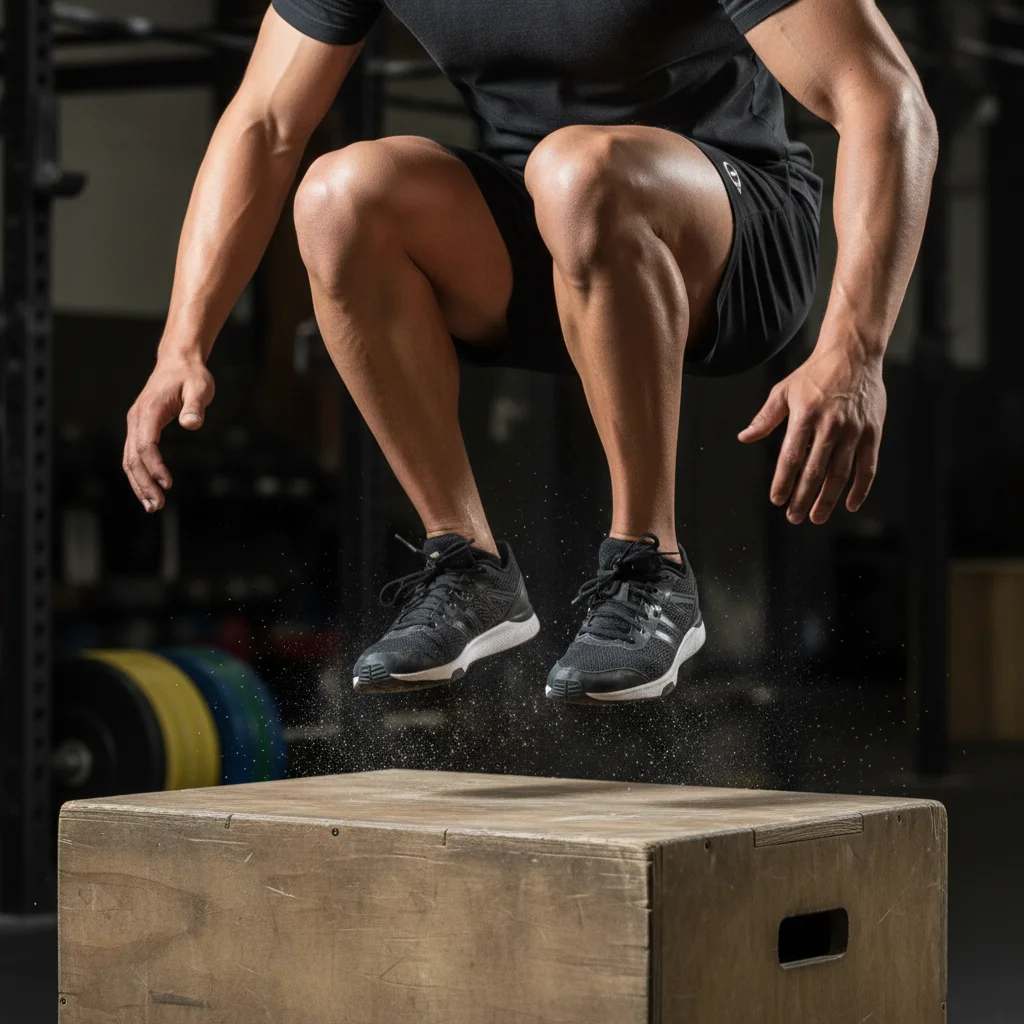
Box jumps are a cornerstone of plyometric training for vertical leap. They teach you to absorb force and immediately redirect it upwards, mimicking the mechanics of a jump. Start with a lower box and gradually increase the height as your technique and confidence improve. Depth jumps are another advanced plyometric exercise where you step off a box and immediately jump as high as possible upon landing. This drill specifically enhances reactive strength, which is crucial for quick, powerful jumps on the basketball court. Always ensure a soft landing to protect your joints and maximize the elastic energy return.
Incorporating jump squats, broad jumps, and single-leg hops will further diversify your plyometric routine. Jump squats involve squatting down and then exploding upwards, focusing on maximum height. Broad jumps help develop horizontal power, which contributes to overall athleticism and can indirectly aid vertical power. Single-leg hops improve unilateral power and balance, essential for cutting and jumping off one foot. Remember, quality over quantity is vital with plyometrics. Perform these drills when you are fresh and fully recovered to ensure maximum output and prevent injury. A typical plyometric session might involve 3-5 sets of 5-10 repetitions for each exercise, with ample rest between sets.
Basketball-Specific Drills for On-Court Jump Enhancement
While general strength and plyometric training are fundamental, integrating basketball-specific drills is essential to transfer your newfound power directly to the court. These drills mimic game situations, allowing you to practice jumping under conditions similar to those you’ll encounter during play. This helps refine your technique, timing, and coordination, ensuring that your improved vertical leap translates into tangible performance benefits in a game setting. It’s about making your training functional and relevant to basketball.
One effective drill is the Mikan drill with a jump finish. After performing the traditional Mikan drill (alternating layups), add a powerful two-foot jump at the end of each layup sequence, aiming to touch the backboard or rim. This drill combines hand-eye coordination, footwork, and a powerful jump. Another excellent drill involves rebounding practice. Have a partner shoot or toss the ball off the backboard, and focus on timing your jump to grab the rebound at its highest point. Practice both offensive and defensive rebounding positions to develop versatile jumping skills.
Basketball Jump Drills:
Approach Jumps: Practice jumping off one or two feet after a short run-up, simulating a layup or dunk attempt. Focus on a strong penultimate step and a powerful arm swing.
Defensive Close-Out Jumps: Practice quickly closing out on an imaginary shooter and then exploding upwards to contest a shot. This builds reactive power in a game-like scenario.
Tip-Ins/Put-Backs: Have a partner shoot and practice quickly jumping to tip the ball back in or grab an offensive rebound. Focus on quick second jumps.
Blocked Shot Drills: Work on timing your jump to block a shot, focusing on verticality without fouling.
These drills not only enhance your vertical leap but also improve your overall basketball IQ and court awareness. By repeatedly practicing jumping in relevant scenarios, your body and mind become more attuned to the demands of the game, making your jumps more efficient and effective when it counts. Consistency with these basketball-specific drills, alongside your strength and plyometric work, will yield the best results for your on-court performance.
Recovery, Nutrition, and Injury Prevention for Sustained Progress
Achieving a higher vertical leap isn’t just about intense training; it’s equally about smart recovery, proper nutrition, and diligent injury prevention. Without these crucial elements, your body won’t be able to adapt to the training demands, leading to plateaus, fatigue, and an increased risk of injury. Remember, muscles grow and repair during rest, not during the workout itself. Neglecting recovery is like trying to drive a car with an empty fuel tank – you won’t get very far.
Adequate sleep is perhaps the most underrated recovery tool. Aim for 7-9 hours of quality sleep per night to allow your body to repair muscle tissue, replenish energy stores, and regulate hormones essential for growth. Active recovery, such as light stretching, foam rolling, or a gentle walk, can also help reduce muscle soreness and improve blood flow. Don’t underestimate the power of hydration; water is vital for all bodily functions, including nutrient transport and waste removal. Dehydration can severely impact performance and recovery, so ensure you’re drinking plenty of water throughout the day, especially around your workouts.
Nutrition plays a pivotal role in fueling your training and facilitating recovery. A balanced diet rich in lean proteins, complex carbohydrates, and healthy fats is essential. Protein provides the building blocks for muscle repair and growth. Complex carbohydrates supply sustained energy for your intense workouts. Healthy fats support hormone production and overall health. Consider nutrient timing, consuming protein and carbohydrates shortly after your workouts to kickstart the recovery process. Injury prevention strategies, such as proper warm-ups, cool-downs, listening to your body, and gradually increasing training intensity, are also paramount to ensure sustained progress without setbacks. Incorporating dynamic stretching before workouts and static stretching after can improve flexibility and reduce muscle tightness, further decreasing injury risk. Ignoring these aspects will inevitably hinder your progress and potentially lead to sidelining injuries.
Periodization and Program Design for Optimal Gains
To consistently add inches to your vertical leap and avoid plateaus, a well-structured training program using periodization is key. Periodization involves systematically varying your training intensity, volume, and exercise selection over specific cycles. This approach helps your body adapt, prevents overtraining, and ensures you peak at the right time. Simply doing the same exercises with the same intensity week after week will eventually lead to stagnation. A thoughtful program design will keep your body guessing and continually progressing.
A typical vertical leap training program might be divided into several phases. An initial anatomical adaptation phase focuses on general strength and conditioning, preparing your body for more intense work. This is where you would build your foundational strength with exercises like squats and deadlifts at moderate weights and higher repetitions. Following this, a maximal strength phase would involve heavier weights and lower repetitions to build raw power. This phase directly enhances your ability to generate force, which is crucial for a powerful jump. The goal here is to get significantly stronger in your primary lifts.
Next comes the power/plyometric phase, where you integrate the explosive drills we discussed earlier, such as box jumps and depth jumps, often alongside lighter strength work. The focus shifts from lifting heavy to moving explosively. Finally, a peaking or in-season phase might involve maintaining strength and power with reduced volume to prevent fatigue, allowing you to perform optimally during games. It’s important to schedule deload weeks periodically, where you significantly reduce training volume and intensity, to allow for full recovery and adaptation. This structured approach, combined with consistent effort, is the most effective way to achieve and maintain a significant boost in your vertical leap.
Frequently Asked Questions
How quickly can I expect to see results in my vertical leap?
Results vary based on individual genetics, training consistency, and starting fitness level. However, with a dedicated and consistent program, many athletes can start to see noticeable improvements in their vertical leap within 4-8 weeks, with more significant gains over 3-6 months.
Is it possible to increase my vertical leap without heavy weights?
While heavy weight training is highly effective for building foundational strength, you can still improve your vertical leap with bodyweight exercises, plyometrics, and resistance bands. These methods can build power and explosiveness, though progress might be slower without the added stimulus of heavy lifting.
How often should I train for vertical leap improvement?
A typical recommendation is 2-3 times per week, allowing for adequate rest and recovery between sessions. Overtraining can lead to fatigue, injury, and diminished returns, so balancing intensity with recovery is crucial for sustained progress.
What is the most important factor for increasing vertical leap?
There isn’t one single most important factor; rather, it’s a combination of strength, power, proper technique, and consistent training. Neglecting any of these areas will limit your potential. A holistic approach focusing on all components yields the best results.
Can stretching help my vertical leap?
Yes, stretching can indirectly help by improving flexibility and range of motion, which allows for better jumping mechanics and reduces the risk of injury. Dynamic stretching before workouts and static stretching after can be beneficial, but it’s not a direct power builder like strength or plyometric training.
Achieving a 3-inch increase in your vertical leap is an ambitious yet entirely attainable goal for dedicated basketball players. By embracing a comprehensive vertical leap training program that integrates foundational strength building, explosive plyometric drills, and basketball-specific applications, you are setting yourself up for significant success. Remember that consistency in your workouts, coupled with meticulous attention to recovery, proper nutrition, and injury prevention, forms the bedrock of sustained progress. These elements are not mere suggestions but critical components that will allow your body to adapt, grow stronger, and jump higher.
The journey to a higher vertical leap is a testament to your commitment and understanding of your body’s capabilities. It’s about more than just adding inches; it’s about developing a more powerful, agile, and resilient athletic physique that will undoubtedly elevate your performance on the basketball court. Take these methods, apply them diligently, and watch as you gain a new dimension to your game, soaring above the competition and making those highlight-reel plays a regular occurrence. Start your training today and unlock your full aerial potential.
Peter B holds a degree in Journalism and has 5 years of experience covering U.S. economic policy, labor markets, and financial news. He writes data-driven news content on topics like inflation, interest rates, and employment trends.