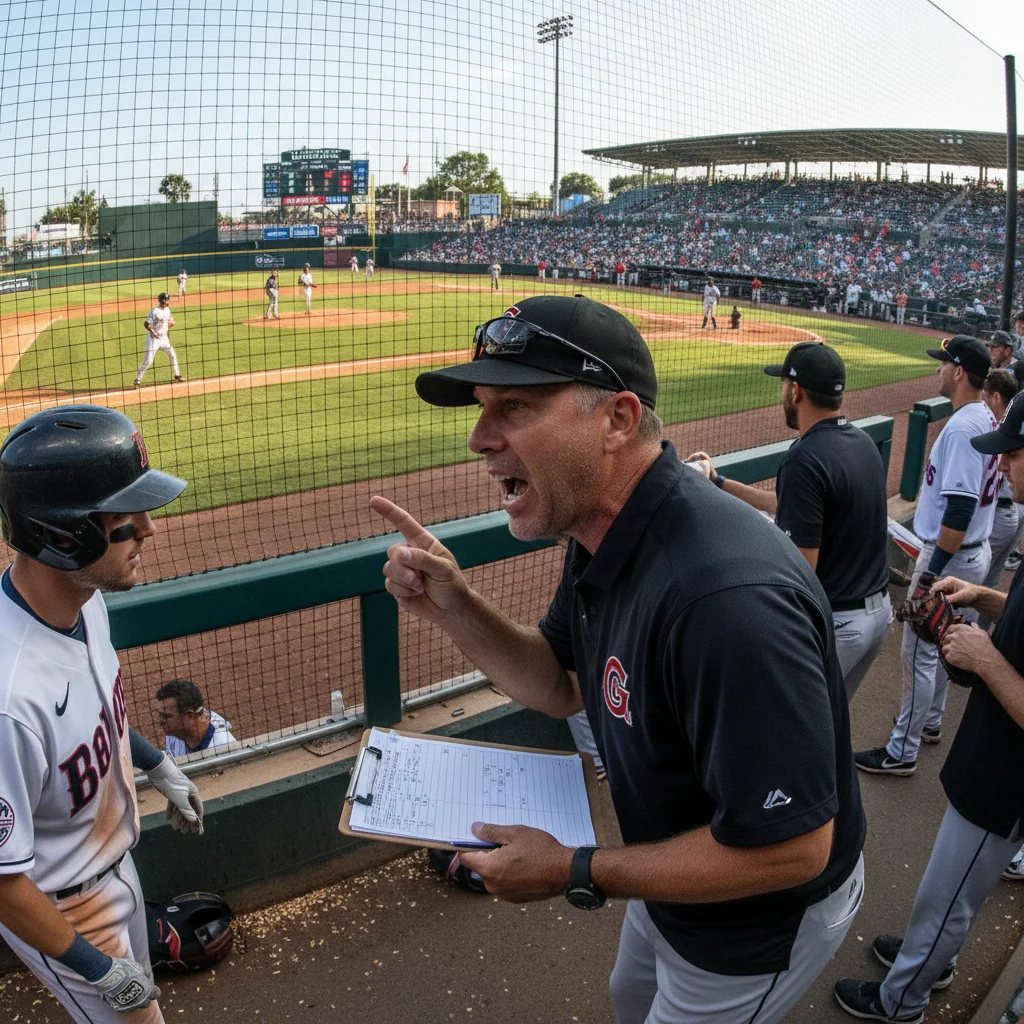
Boost Stolen Base Success: 7 Smart Base Running Techniques
Master smart base running techniques to elevate your team's performance. This guide reveals 7 key strategies to boost stolen base success by 20%, crucial for any playoff race contender.
By: pedropadm2025@gmail.com on agosto 22, 2026
In the high-stakes environment of a playoff race, every advantage counts. Mastering smart base running can be the difference between a win and a loss, especially when it comes to boosting your stolen base success rate. Teams that excel in this often see a significant increase in their scoring opportunities, potentially improving their success rate by as much as 20%.
This isn’t just about raw speed; it’s about intelligence, observation, and execution. We’re diving deep into seven critical techniques that will transform your base runners into strategic weapons, making them more efficient and effective on the basepaths. From understanding pitcher tendencies to perfecting your slide, these insights are designed to give your team the edge it needs right now.
Understanding Pitcher Tendencies and Pick-Off Moves
One of the most crucial aspects of smart base running is developing a keen understanding of pitcher tendencies and their pick-off moves. This knowledge isn’t gained overnight; it requires diligent observation and preparation. Before a game, base runners should study video footage of opposing pitchers, paying close attention to their wind-up variations, their timing to the plate, and any tells they might have before attempting a pick-off.
For instance, some pitchers might have a slight head turn, a twitch in their glove, or a specific leg kick that signals whether they are going home or to first base. Recognizing these subtle cues can give a runner that split-second advantage needed to get a better jump or to safely return to the base. It’s also vital to understand a pitcher’s favorite pick-off moves – some might prefer a slide step, others a jump turn, and knowing which one is coming can help a runner anticipate and react appropriately. This detailed preparation transforms a good runner into a truly smart base runner.
During the game, continue to observe the pitcher. Do they vary their pick-off attempts? Are they more likely to throw over on a certain count or with a specific runner on base? These real-time observations, combined with pre-game scouting, build a comprehensive profile of the pitcher’s habits. This ongoing analysis helps base runners make informed decisions, reducing the risk of being picked off and increasing the chances of a successful steal. Ultimately, it’s about turning information into action and gaining an invaluable edge.
Perfecting Your Lead and Jump: The Art of Anticipation
The success of any stolen base attempt hinges significantly on the quality of the lead and the explosiveness of the jump. A proper lead isn’t just about distance; it’s about balance, readiness, and the ability to react instantly. Base runners should practice taking a lead that puts them in a strong, athletic position, allowing for a quick burst towards the next base or a rapid retreat back to their current one. The lead should be aggressive enough to challenge the defense but controlled enough to avoid being picked off easily.
The jump, however, is where anticipation truly comes into play. This involves timing the pitcher’s delivery to perfection. Runners should watch the pitcher’s front shoulder, knee, or the break of their hands, looking for the precise moment when they commit to throwing home. A fraction of a second gained here can make all the difference in beating the throw. It’s a delicate balance of patience and aggression, waiting for the optimal moment to explode off the base. This skill is honed through countless repetitions and a deep understanding of pitching mechanics.
Moreover, runners should not only anticipate the pitcher but also consider the catcher’s arm strength and release time. A slow-footed catcher or one with a long release can provide a larger window for a successful steal, even with a slightly less aggressive jump. By combining an optimal lead with expert anticipation of both the pitcher’s delivery and the catcher’s capabilities, a base runner significantly increases their chances of a safe arrival at the next base. This strategic approach elevates mere running to an art form.
Strategic Sliding Techniques for Safety and Speed
Sliding is not just a way to avoid a tag; it’s a critical component of smart base running that can shave precious milliseconds off your time and ensure your safety. There are several types of slides, each with its own advantages, and a savvy base runner knows when to employ which one. The most common are the bent-leg slide and the head-first slide, but the pop-up slide also offers unique benefits.
Choosing the Right Slide
Bent-Leg Slide: This is generally considered the safest slide for avoiding injury, as it keeps your body low and allows you to absorb impact with your legs. It’s excellent for breaking up double plays or when you need to quickly get up and advance to the next base if an overthrow occurs.
Head-First Slide: Often preferred for speed, as it allows a runner to cover the last few feet to the base more quickly. However, it carries a higher risk of injury to the hands, wrists, and shoulders. It’s best used when a runner needs to get under a tag quickly and knows they will be safe.
Pop-Up Slide: A specialized bent-leg slide that allows the runner to pop up immediately and be in a ready-to-run position. This is invaluable when there’s a chance to advance on an error or an overthrown ball, as it minimizes the time spent on the ground.
Regardless of the chosen slide, proper technique is paramount. Runners should aim to slide to the side of the base, presenting a smaller target for the tag. Practicing these techniques regularly, both for speed and safety, is essential for any base runner looking to improve their overall stolen base success rate. The goal is always to be both effective and protected.
Reading the Defense: Infielders, Outfielders, and Signals
A truly smart base runner doesn’t just focus on the pitcher and catcher; they constantly read the entire defensive alignment and anticipate movements. This involves understanding where infielders are positioned, how outfielders are playing, and even picking up subtle signals from the dugout or the field. Before every pitch, a base runner should scan the field, noting any shifts, deep or shallow positioning, or unusual stances that might indicate a play.
For example, if the second baseman is playing deep, it might open up a larger gap for a stolen base attempt on second. Conversely, if an infielder is creeping in, it could signal a pick-off play or a pitch-out. Outfielders’ positions can also influence decisions on whether to tag up and advance on a fly ball; a deep outfielder means more time for the runner to get to the next base. This constant assessment of the defense provides crucial information that informs immediate decisions on the basepaths.
Beyond positioning, runners should also be alert to defensive signals. While not always obvious, sometimes a quick glance between infielders or a specific hand signal from the dugout can reveal a planned play. Developing this observational skill allows base runners to not only react to plays but to anticipate them, giving them a significant advantage. This proactive approach to reading the defense is a hallmark of elite base running, turning every base path into a chess board where every move is calculated.
Communication and Team Strategy on the Basepaths
Effective communication is the backbone of successful team strategy on the basepaths. Base running is rarely an individual endeavor; it often involves coordinated movements and shared intelligence. Runners need to communicate with coaches, with each other, and sometimes even with the batter to execute plays seamlessly. This might involve relaying information about pitcher tendencies, confirming signals, or making calls during a rundown.
For instance, a runner on first base might observe a pitcher’s tell for a pick-off and silently communicate it to a runner on second, giving both an advantage. Coaches play a vital role in this, providing signals for steals, hit-and-runs, or holding runners. It’s crucial that these signals are clear, concise, and understood by everyone involved. Miscommunication can lead to costly outs and missed opportunities, undermining even the best individual efforts. Therefore, practicing these communication protocols is just as important as practicing physical techniques.
Team strategy extends beyond just stealing bases. It includes knowing when to hold, when to advance on a passed ball or wild pitch, and how to execute rundowns efficiently. Each player needs to understand their role in different scenarios and how their actions impact the team. For example, a runner on third base must know whether to break for home on contact or hold up, depending on the game situation and the coach’s instructions. This collective understanding and execution of a unified base running strategy are what truly elevate a team’s performance, making every player a contributor to the overall success on the basepaths.
Aggressive Yet Smart: When to Take Risks
In baseball, especially during a tight playoff race, there’s a fine line between being aggressive and being reckless. Smart base running requires knowing when to take calculated risks that can pay off big, and when to play it safe. This decision-making process is influenced by a multitude of factors, including the score, the inning, the count, the runners on base, and the opposing team’s defensive capabilities. A truly intelligent base runner understands these variables and uses them to make opportune choices.
For example, attempting a steal with two outs and a runner on third might be too risky if the next batter is a strong hitter, as an out would end the inning. However, with a runner on first, one out, and a struggling hitter at the plate, a steal attempt might be a smart move to get into scoring position. The key is to assess the potential reward against the potential cost. An aggressive steal that leads to a run can shift momentum, but an unnecessary out can stifle an offensive rally.
This calculated aggression also applies to advancing on passed balls, wild pitches, or fly balls. Runners must quickly evaluate the trajectory of the ball, the speed of the throw, and the position of the fielders to determine if an extra base is attainable. It’s about being prepared to seize every opportunity, but only when the odds are in your favor. This balance of boldness and prudence is a hallmark of elite base runners, enabling them to make plays that impact the game without jeopardizing their team’s chances. It’s about leveraging every fraction of an advantage.
Drills and Practice: Reinforcing Base Running Fundamentals
Even the most talented base runners need consistent practice to maintain and improve their skills. Drills are essential for reinforcing base running fundamentals, building muscle memory, and ensuring that techniques become second nature under game pressure. These practices should cover every aspect of base running, from leads and jumps to slides and defensive reads. Regular repetition helps players react instinctively, rather than having to think through every movement.
One effective drill is the ‘lead and return’ drill, where runners practice taking various leads and reacting to different pick-off moves from a coach simulating a pitcher. This helps them refine their timing and quickness in getting back to the base. Another valuable drill is the ‘situational base running’ drill, where coaches set up different game scenarios (e.g., runner on first, one out; runner on second, no outs) and players must execute the appropriate base running strategy, including steals, tags, and advancing on hits.
Sliding practice is also crucial, not just for technique but for building confidence and reducing the fear of injury. Using sliding pads and designated sliding areas can encourage players to practice head-first and bent-leg slides repeatedly. Incorporating live reads of pitchers and fielders during practice sessions helps players develop their observational skills in a controlled environment. Consistent, varied, and scenario-based drills are the cornerstone of developing truly smart base runners who can perform under the pressure of a playoff race.
Frequently Asked Questions
What is the ideal lead distance for a stolen base?
The ideal lead distance varies by runner speed and pitcher/catcher quickness, but generally, it’s about 10-12 feet from the base. This allows for an aggressive jump while still being able to get back safely on a pick-off attempt.
How can a runner improve their jump off the base?
Improving your jump involves studying pitcher mechanics for tells, anticipating their movements, and practicing explosive starts. Drills focusing on short sprints and quick reactions are highly beneficial.
Is a head-first slide always faster than a bent-leg slide?
While often perceived as faster, a head-first slide carries higher injury risks. A well-executed bent-leg or pop-up slide can be just as effective in terms of speed and often safer, especially for getting up quickly.
How important is communication between base runners?
Communication is extremely important. Runners can share observations about pitcher tendencies, confirm signals, and make calls during rundowns, all of which contribute to better collective base running decisions.
When should a base runner avoid attempting a steal?
Runners should avoid stealing when the risk outweighs the reward, such as with two outs and a strong hitter at the plate, or if the pitcher and catcher are known for quick pick-offs and strong throws, minimizing success chances.
Mastering smart base running is an invaluable asset for any team, particularly when vying for success in a competitive playoff race. By meticulously applying these seven techniques—from deciphering pitcher tendencies and perfecting your lead to executing strategic slides and communicating effectively—teams can dramatically enhance their stolen base success rate. This isn’t merely about raw athleticism; it’s about transforming every base runner into a strategic thinker, capable of making split-second decisions that alter the course of a game.
The commitment to understanding the defense, practicing aggressive yet calculated risks, and reinforcing fundamentals through consistent drills will yield significant dividends. These strategies empower players to create scoring opportunities, put pressure on the opposing team, and ultimately, secure crucial victories. Embrace these principles, integrate them into your team’s philosophy, and watch as your base running becomes a formidable weapon, propelling your team towards its championship aspirations. The path to a 20% boost in stolen base success is clear: intelligent, disciplined, and proactive base running.
Peter B holds a degree in Journalism and has 5 years of experience covering U.S. economic policy, labor markets, and financial news. He writes data-driven news content on topics like inflation, interest rates, and employment trends.