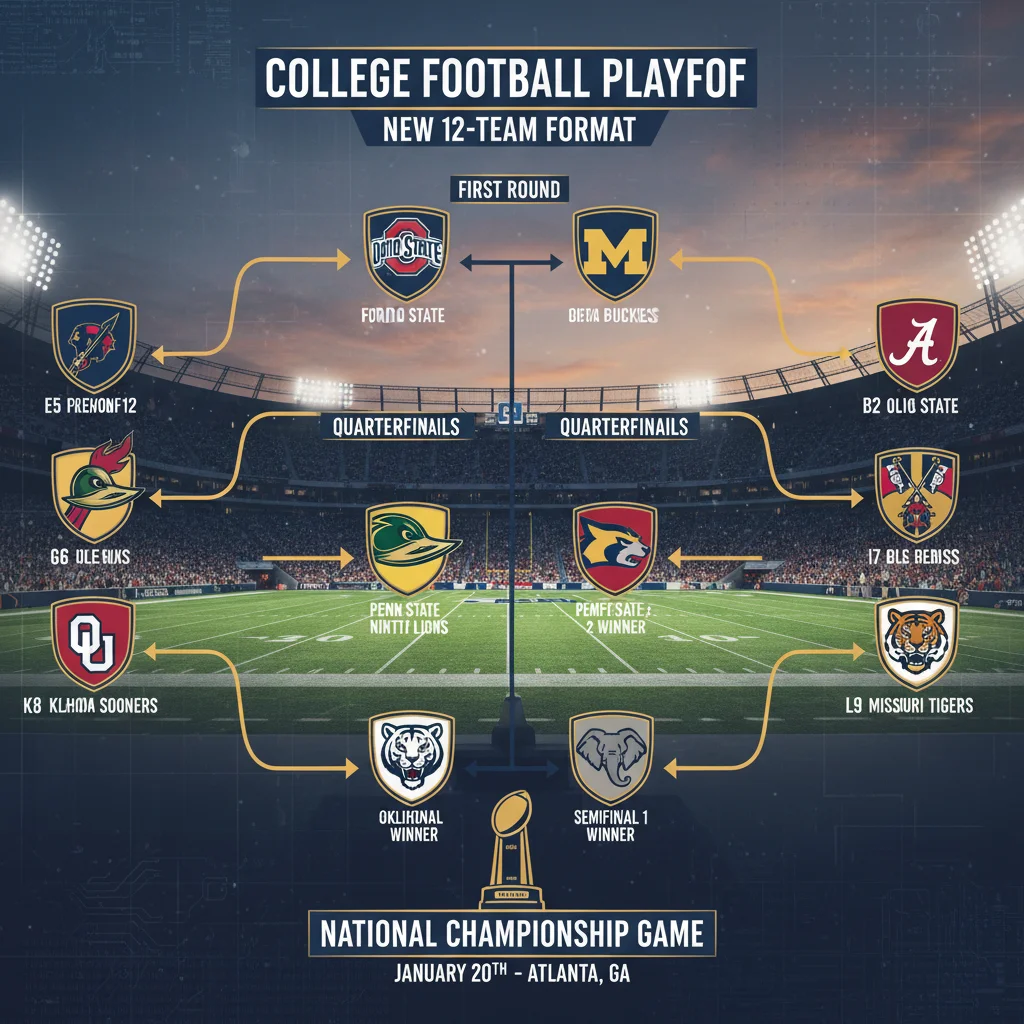
College Football Playoff Expansion: 12-Team Format Impact
The college football playoff is expanding to a 12-team format this fall, fundamentally changing the landscape of the sport. This shift promises to reshape recruitment strategies, accelerate conference realignment, and offer a fresh, more inclusive path to the national championship, impacting every facet of college football.
By: pedropadm2025@gmail.com on agosto 22, 2026
The landscape of college football is on the brink of its most significant transformation in decades with the eagerly anticipated expansion of the College Football Playoff (CFP) to a 12-team format, set to kick off this fall. This monumental shift is far more than just adding more games; it represents a fundamental re-evaluation of how teams compete, how players are recruited, and ultimately, how a national champion is crowned. The expanded playoff impact will ripple through every level of the sport, from high school prospects to powerhouse conferences.
This new era promises increased opportunities for a wider range of teams to contend for the ultimate prize, moving away from the often-criticized four-team model that frequently left deserving teams on the outside looking in. Fans can expect more thrilling matchups, higher stakes, and an extended season of meaningful football. Understanding the intricacies of this new system is crucial for anyone following the sport, as it will redefine strategies, alliances, and the very culture of college football competition.
The New 12-Team Playoff Format Explained
The transition from a four-team to a 12-team College Football Playoff marks a historic moment for the sport, fundamentally altering the path to the national championship. Under the new structure, the playoff field will consist of the six highest-ranked conference champions, ensuring automatic bids for a broader representation of the sport’s conferences. This inclusion guarantees that even teams from historically less dominant conferences have a legitimate shot at competing on the biggest stage, fostering a more equitable system than before.
Following the automatic qualifiers, the remaining six spots will be filled by the next highest-ranked teams, regardless of their conference affiliation. This at-large selection process maintains a balance, allowing for multiple teams from elite conferences to still make the cut based on their performance throughout the regular season. The overall ranking system, overseen by the CFP selection committee, will continue to play a pivotal role in determining these at-large bids, adding significant weight to every regular-season game.
The expanded format introduces a crucial first-round bye for the top four conference champions, rewarding their regular-season dominance with a week of rest and preparation. These four teams will host their quarterfinal games, providing a substantial home-field advantage and an incredible atmosphere for early playoff contests. The remaining eight teams will play in a first-round matchup, with the higher seeds hosting these games on their home campuses, bringing playoff football directly to college towns across the nation. This structure not only adds more games but also ensures that the regular season’s importance remains paramount, as teams vie for those coveted top-four spots.
Impact on Recruitment Strategies
The shift to a 12-team playoff system is poised to revolutionize college football recruitment, fundamentally changing how coaches approach talent acquisition and how prospects view potential destinations. With more teams having a realistic chance at making the postseason, the allure of joining a program with a clear path to the playoff becomes even stronger. This means that mid-tier programs, which previously struggled to attract top-tier talent due to perceived limited championship opportunities, might now find themselves in a more competitive recruiting position, creating a broader landscape for player development.
Coaches will undoubtedly adjust their pitches, emphasizing not just immediate playing time but also the program’s strategic advantages within the new playoff structure. The focus might shift from simply competing for a conference title to demonstrating a clear path to one of the six automatic bids or a strong argument for an at-large spot. This expanded playoff impact on recruitment could lead to a more diversified distribution of talent across the country, rather than concentrating it solely within a handful of traditional powerhouses. Recruits will weigh factors like coaching stability, academic support, and facilities even more heavily against a program’s playoff potential.
New Recruiting Narratives
Increased Playoff Access: Programs can now genuinely promise a more accessible route to the national championship, appealing to ambitious young athletes.
Broader Exposure: Playing in the expanded playoff guarantees national exposure for players, which can significantly boost their NFL draft stock.
Impact of Early Playing Time: For teams not consistently in the top 4, the chance to make the playoff might offer earlier playing opportunities for talented freshmen and sophomores.
Transfer Portal Dynamics: The transfer portal could see even more activity as players seek programs that offer the best blend of playing time and playoff contention under the new rules.
Ultimately, the expanded playoff creates a more dynamic and competitive recruiting environment, where programs of all sizes can offer a compelling vision to prospective student-athletes. This will likely make the recruitment process more intense and strategic for all involved.
Accelerated Conference Realignment Trends
The move to a 12-team playoff format is not just a change in postseason structure; it’s a catalyst that will undoubtedly accelerate the ongoing trends of conference realignment across college football. Conferences are acutely aware that their strength and the number of high-ranked teams they can consistently produce will directly impact their automatic bids and overall representation in the expanded playoff. This intensified competition for playoff spots will drive conferences to seek out members that enhance their competitive profile and market value, leading to further shake-ups in the collegiate landscape.
We’ve already witnessed significant shifts with teams moving between conferences in pursuit of greater stability, revenue, and competitive advantage. The expanded playoff impact will only amplify these motivations. Conferences will be looking to consolidate power, creating super-conferences that can consistently land multiple teams in the playoff field. This could mean more schools abandoning long-standing rivalries and traditional affiliations in favor of strategic alliances that promise a more direct path to the national championship contention and increased financial benefits.
The desire for a coveted automatic bid for a conference champion will put immense pressure on weaker conferences to either strengthen their ranks or face potential marginalization. This environment could lead to a further stratification of college football, with a few dominant conferences controlling the majority of playoff berths, while others struggle for relevance. The financial implications are also massive, as playoff appearances bring substantial revenue, making conference affiliation a critical business decision for university athletic departments.
The ripple effects of this realignment will extend beyond football, impacting other sports and academic programs as institutions weigh the benefits and drawbacks of changing conferences. Expect more announcements of schools switching allegiances as the new playoff system fully takes hold, reshaping the very geography of college sports.
Financial Implications and Revenue Generation
The expansion of the College Football Playoff to 12 teams is poised to generate a monumental increase in revenue, fundamentally reshaping the financial landscape of collegiate athletics. More games mean more television rights, more advertising opportunities, and more ticket sales, all contributing to a significantly larger financial pie. This influx of capital will be distributed among the participating conferences and schools, creating a substantial economic incentive for programs to not only make the playoff but also to ensure their conference is well-represented.
The new media rights deal for the expanded playoff is expected to be worth billions of dollars, dwarfing previous agreements. This massive revenue stream will be a game-changer for athletic departments, potentially funding facility upgrades, coaching salaries, and enhanced athlete support services. While the distribution model will be complex and subject to ongoing negotiations, the overall increase in funds is undeniable. Conferences will be vying fiercely for a larger share, which further fuels the conference realignment discussions.
Beyond the direct media rights, the economic impact extends to local economies. Host cities for playoff games, especially those hosting first-round matchups on campus, will see a significant boost in tourism, hospitality, and retail spending. This localized economic benefit adds another layer of importance for universities and their communities to secure a playoff berth. The expanded playoff impact on revenue generation will also likely influence future discussions around Name, Image, and Likeness (NIL) deals for student-athletes, as the overall financial health of college football continues to grow.
The Path to the National Championship: New Dynamics
The journey to the National Championship under the 12-team playoff format introduces entirely new dynamics, making the path both more accessible and potentially more arduous for contenders. No longer will a single regular-season loss necessarily derail a team’s championship aspirations; the expanded field provides a greater margin for error and more opportunities for redemption. This shift means that teams can build momentum throughout the season, even after an early stumble, and still contend for a national title, which promises a more exciting and unpredictable regular season.
However, while the door to the playoff is wider, the number of games required to win the championship also increases for many teams. Only the top four conference champions receive a first-round bye, meaning eight teams will have to navigate an additional playoff game to reach the quarterfinals. This extended postseason schedule will test team depth, conditioning, and resilience like never before. The physical and mental toll of playing more high-stakes games will become a critical factor, placing a premium on robust rosters and effective player management throughout the entire season and into the playoffs.
The seeding also takes on immense importance. Earning one of the top four seeds not only grants a crucial bye week but also guarantees a home-field advantage in the quarterfinals, a significant boost in the high-pressure environment of the playoffs. This makes every regular-season game a potential determinant for home-field advantage, intensifying the competition from week one. The expanded playoff impact means that strategic planning, injury management, and peak performance at the right time will be more crucial than ever for teams hoping to hoist the championship trophy.
Ultimately, the new path to the National Championship is designed to be more inclusive and exciting, but it also demands a higher level of sustained excellence and strategic execution. Teams will need to adapt their approaches to ensure they are peaking at the right time and have the depth to endure a longer, more rigorous postseason run, culminating in the ultimate prize.
Frequently Asked Questions
How many teams will participate in the expanded College Football Playoff?
Starting this fall, the College Football Playoff will expand to include 12 teams. This new format significantly increases the number of programs with a chance to compete for the national championship, making the postseason more inclusive and exciting for fans and teams alike.
What is the selection process for the 12-team playoff?
The 12-team playoff will consist of the six highest-ranked conference champions, who receive automatic bids. The remaining six spots will be filled by the next highest-ranked teams, determined by the CFP selection committee, regardless of their conference affiliation.
Will there be first-round byes in the new playoff format?
Yes, the top four ranked conference champions will receive a first-round bye. These four teams will also host their quarterfinal games, providing a significant advantage and rewarding their strong regular-season performance and conference championship victories.
How does the expanded playoff affect regular-season games?
While more teams have a chance to make the playoff, regular-season games remain incredibly important. Teams will be vying for conference championships to secure automatic bids, and for the top four seeds to earn a crucial first-round bye and home-field advantage, intensifying competition throughout the season.
What are the potential financial benefits of the expanded playoff?
The expanded playoff is expected to generate billions in new revenue from media rights, ticket sales, and related commercial activities. This increased revenue will be distributed among conferences and schools, significantly boosting athletic department budgets and potentially impacting facility upgrades and athlete support.
The launch of the 12-team College Football Playoff this fall marks a new chapter for the sport, promising a seismic shift in its competitive and economic landscape. The expanded playoff impact will be felt across every dimension, from how young athletes choose their collegiate homes to the very structure of college conferences. This evolution offers a more inclusive and exciting path to the National Championship, ensuring that more teams and fan bases can dream of hoisting the ultimate trophy.
We’ve explored how recruitment strategies are adapting to this new reality, with programs now offering clearer pathways to postseason glory, potentially diversifying talent distribution. The acceleration of conference realignment is also a direct consequence, as institutions strategically position themselves for enhanced competitive and financial stability. Furthermore, the immense financial implications, driven by record-breaking media deals, underscore the business acumen now required to thrive in this evolving environment. The path to the championship itself will be more rigorous, demanding greater depth and strategic execution from contenders.
As college football embarks on this exciting new era, fans, players, and coaches alike will witness a sport transformed. The expanded playoff promises more thrilling moments, heightened competition, and a broader narrative that extends beyond just a few traditional powerhouses. Stay tuned, as the drama and excitement are only just beginning.
Peter B holds a degree in Journalism and has 5 years of experience covering U.S. economic policy, labor markets, and financial news. He writes data-driven news content on topics like inflation, interest rates, and employment trends.