Player Contracts: Unpacking Salary Cap Implications
Explore the complex interplay between player contracts and salary cap implications in professional sports. This guide breaks down the essential financial strategies teams use to build competitive rosters while navigating strict league rules and financial constraints.
By: Michael Sete on agosto 22, 2026
In the high-stakes world of professional sports, understanding player contracts and salary cap implications is crucial for both fans and team executives. These financial structures dictate how teams are built, how players are compensated, and ultimately, how competitive a franchise can be. It’s a complex dance of numbers, negotiations, and strategic foresight that shapes the landscape of every major league.
From multi-million dollar deals to intricate bonus structures, player contracts are far more than just agreements between an athlete and a team. They are vital components of a larger financial puzzle, heavily influenced by the league’s salary cap rules. Navigating these rules effectively can be the difference between championship contention and years of rebuilding, making the financial playbook just as important as the on-field strategy.
The Basics of Player Contracts and Salary Caps
Player contracts are the foundation of any professional sports team. These agreements outline the terms of employment for an athlete, including salary, bonuses, contract length, and other specific clauses. While the general idea is simple – a player gets paid to play – the specifics can become incredibly detailed and vary significantly across different sports leagues. Understanding these nuances is the first step in grasping the financial complexities of professional sports.
The salary cap, on the other hand, is a league-imposed limit on the total amount of money a team can spend on player salaries. Its primary purpose is to promote competitive balance, ensuring that wealthier teams cannot simply buy all the best talent and dominate indefinitely. Without a salary cap, leagues would risk becoming predictable, with the same few teams always at the top. The cap forces teams to be strategic with their spending, making every contract decision critical.
Different leagues employ various types of salary caps. Some have a ‘hard cap,’ meaning teams cannot exceed the limit under any circumstances. Others operate with a ‘soft cap,’ which allows teams to exceed the limit under certain conditions, often by paying a luxury tax. These variations significantly impact how teams approach player contracts and roster construction. For instance, a soft cap might encourage teams to spend more for a championship window, accepting the financial penalties that come with it.
Decoding Contract Types and Their Impact
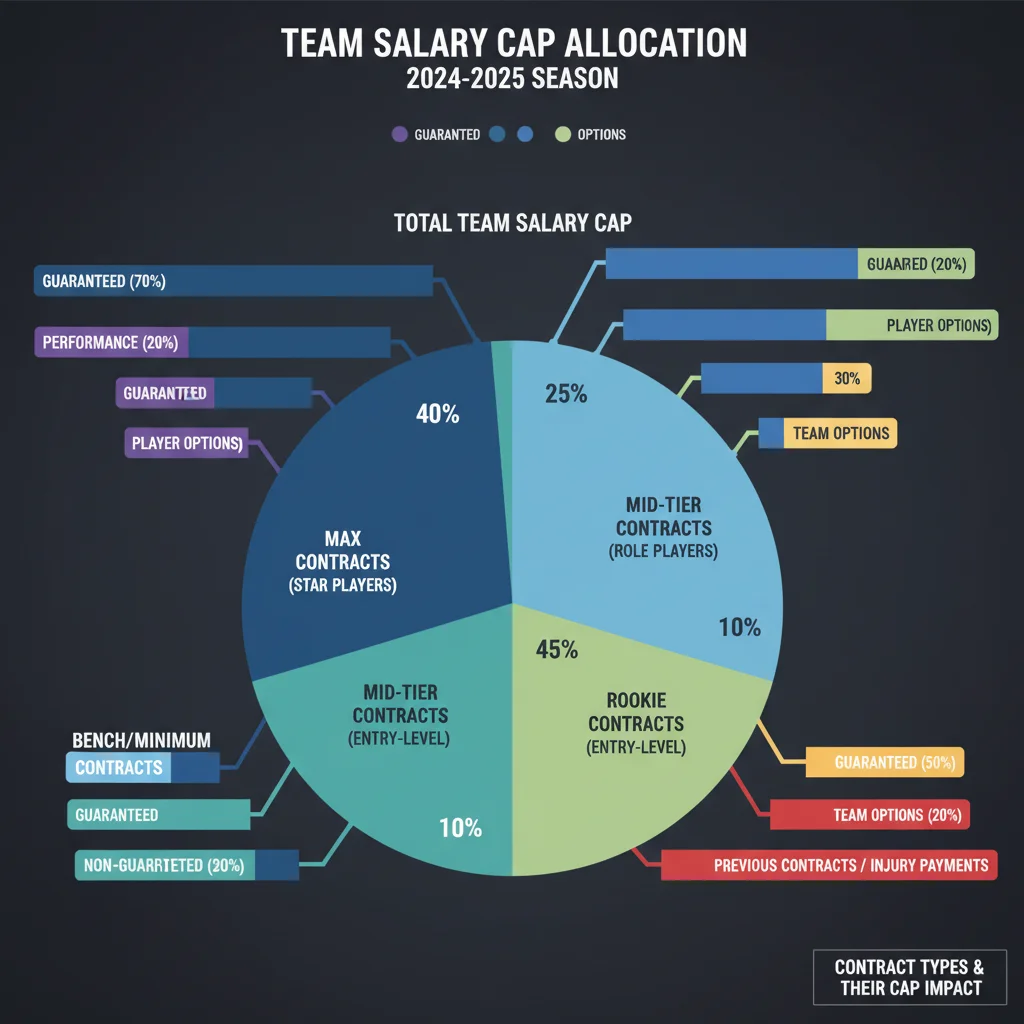
Not all player contracts are created equal, and their structure plays a huge role in how they affect a team’s salary cap. Fully guaranteed contracts, for example, ensure a player receives their entire salary regardless of injury or performance. These are highly sought after by players but represent a significant financial commitment for teams, as they tie up cap space for the duration of the agreement. Conversely, non-guaranteed contracts offer teams more flexibility, allowing them to release a player without paying the remaining salary, though this comes with less security for the athlete.
Beyond guarantees, contracts often include various types of bonuses. Signing bonuses, for instance, are paid upfront or over a few years and are typically prorated against the salary cap over the life of the contract. This can help teams manage current cap space but creates future cap obligations. Performance bonuses, on the other hand, are tied to specific achievements, like making an All-Star team or reaching a certain statistical milestone. These are usually cap-friendly as they only count against the cap if earned, offering an incentive for players without immediate cap strain.
Understanding these different contract components is vital for both general managers and fans. A team might offer a lower base salary but include significant performance incentives to stay under the cap while still motivating a player. Or, they might front-load a contract, paying more in the early years to free up cap space later, or back-load it to delay cap hits. Each choice has strategic implications for the team’s financial health and competitive future.
Key Contract Components
Base Salary: The core annual payment to the player.
Signing Bonus: An upfront payment often prorated over the contract’s length for cap purposes.
Roster Bonus: A payment due if a player is on the roster on a specific date, encouraging them to stay.
Performance Incentives: Bonuses tied to individual or team achievements.
Guaranteed Money: The portion of the contract the player is assured to receive, regardless of circumstances.
These components are skillfully combined to create contracts that balance player desires with team financial realities, all while navigating the strictures of the salary cap.
Strategic Cap Management and Roster Construction
Effective salary cap management is an art form, demanding foresight and creativity from front offices. Teams constantly look for ways to optimize their cap space to build a competitive roster. This often involves making tough decisions about which players to keep, which to let go, and how to structure new deals. It’s a continuous balancing act, trying to maximize talent while staying within the financial boundaries set by the league.
One common strategy is ‘restructuring’ contracts. This involves converting a player’s base salary into a signing bonus, which can then be prorated over future years. This immediately frees up current cap space, allowing a team to sign other players or absorb new contracts. However, it also pushes cap obligations into the future, potentially creating larger cap hits down the line. It’s a short-term gain for a long-term commitment, a strategy often employed by teams in a championship window.
Another crucial aspect is managing draft picks and rookie contracts. Players selected in the draft typically sign contracts based on a predetermined rookie salary scale, which is generally more cap-friendly than veteran deals. This allows teams to acquire young talent at a relatively low cost, providing valuable cap flexibility. As these players develop and approach the end of their rookie deals, teams face critical decisions about extending them to long-term, more expensive contracts.
The ability to identify undervalued players and make shrewd trades also plays a significant role in cap management. Acquiring a talented player on a team-friendly contract can be a huge boost, both on the field and for the salary cap. Conversely, trading away an expensive player who isn’t performing up to their contract can free up much-needed cap space, allowing for future acquisitions. These moves require a deep understanding of both player value and the intricate cap rules.
Navigating Free Agency and Trade Deadlines
Free agency and trade deadlines are peak times for salary cap implications and player contract negotiations. During free agency, teams compete to sign available players, often driving up contract values. This is where a team’s prior cap management decisions truly come into play. A team with ample cap space can be aggressive in pursuing top talent, while a cap-strapped team must be more creative, perhaps offering shorter deals or structuring contracts with lower initial cap hits.
Understanding the market value of players is critical during free agency. Overpaying for a player can cripple a team’s cap for years, limiting their ability to sign other key contributors. Conversely, finding value in free agency can significantly elevate a team’s competitive standing. It requires extensive scouting, financial modeling, and a clear vision for the team’s future roster. The decisions made during this period can have lasting consequences.
The trade deadline presents another complex challenge for cap management. Teams looking to contend might acquire expensive players, requiring them to shed salary elsewhere or utilize existing cap space. Teams looking to rebuild might trade away high-salaried veterans for draft picks or younger, cheaper talent. Trades often involve complex salary matching rules, where teams must ensure the incoming and outgoing salaries balance out within the cap regulations.
Additionally, understanding the various trade exceptions and mechanisms (like trade clauses, no-trade clauses, or sign-and-trades) is crucial. These elements can add layers of complexity to any deal, impacting both the player’s future and the team’s financial flexibility. Successful navigation of free agency and trade deadlines is a testament to a front office’s financial acumen and strategic planning, directly influencing the team’s ability to compete.
The Long-Term Impact of Financial Decisions
Every decision regarding player contracts and salary cap management has long-term ramifications for a sports franchise. A poorly structured long-term contract can become an ‘albatross,’ tying up significant cap space for a player who is no longer performing at a high level. This can severely limit a team’s ability to sign new talent or retain key players as their contracts expire. It’s why teams are often wary of offering excessively long deals to aging players, even if their past performance warrants it.
Conversely, shrewd long-term planning can set a team up for sustained success. By drafting well, developing young talent, and signing key players to team-friendly extensions before they hit free agency, a team can maintain a strong core while preserving cap flexibility. This allows them to make opportunistic moves, whether it’s signing a veteran free agent to fill a specific need or acquiring a star player via trade without completely gutting their roster or future cap space.
The concept of ‘dead cap’ or ‘dead money’ is another important long-term consideration. This refers to salary cap space that is allocated to players who are no longer on the team roster. It typically occurs when a player is released or traded, but a portion of their guaranteed money or prorated signing bonus still counts against the cap. Managing dead cap effectively is crucial, as too much dead money can severely restrict a team’s ability to operate financially, forcing them to rebuild more slowly.
Ultimately, the financial playbook in professional sports is about balancing present competitiveness with future sustainability. Teams must weigh the immediate benefits of signing a star player against the potential long-term cap implications. It’s a dynamic and ever-evolving challenge, where success often hinges on an organization’s ability to project future trends, manage risk, and make financially sound decisions years in advance, ensuring the team remains competitive for the long haul.
Frequently Asked Questions
What is a ‘hard cap’ versus a ‘soft cap’?
A ‘hard cap’ means a team cannot spend a single dollar over the league-imposed limit, with no exceptions. A ‘soft cap’ allows teams to exceed the limit under certain circumstances, usually by incurring financial penalties like a luxury tax, which is then often redistributed to non-taxpaying teams.
How do signing bonuses affect the salary cap?
Signing bonuses are typically prorated over the length of the contract for salary cap purposes, rather than hitting the cap all at once in the year they are paid. For example, a $10 million signing bonus on a five-year contract would count as $2 million against the cap each year, providing cap relief in the initial year.
What is ‘dead cap’ money?
‘Dead cap’ money refers to salary cap space that is still allocated to a player who is no longer on the team’s roster. This usually happens when a player with guaranteed money or prorated signing bonus is released or traded before their contract fully expires, and those previously accounted for cap hits still apply.
Why do teams restructure contracts?
Teams restructure contracts primarily to free up immediate salary cap space. By converting base salary into a signing bonus and prorating it over future years, they can reduce the current year’s cap hit, allowing them to sign other players, absorb new contracts, or simply get under the cap.
How does the draft impact salary cap management?
Draft picks typically sign contracts based on a predetermined rookie salary scale, which makes them relatively inexpensive compared to veteran players. This provides teams with cost-controlled talent, allowing them to allocate more cap space to proven veterans and maintain overall cap flexibility as they build their roster.
The intricate world of player contracts and salary cap implications is far more than just financial jargon; it’s the strategic backbone of professional sports. Every major league team operates within a complex financial ecosystem where careful planning, shrewd negotiations, and a deep understanding of the rules are paramount. From the structure of guaranteed money and performance bonuses to the long-term impact of dead cap space, these elements dictate a team’s ability to compete and sustain success.
Fans and aspiring sports professionals alike can gain a richer appreciation for the game by understanding these behind-the-scenes financial maneuvers. It’s not just about who scores the most points or makes the biggest plays; it’s also about who manages their player contracts and salary cap most effectively. The ongoing dance between player compensation and league-imposed financial limits ensures competitive balance and adds another fascinating layer to the drama of professional sports. By staying informed, you’ll see the game through a new, more strategic lens, appreciating the financial chess match that unfolds off the field as much as the athletic prowess on it.