NFL Salary Cap Increase: Team Building Strategies Explained
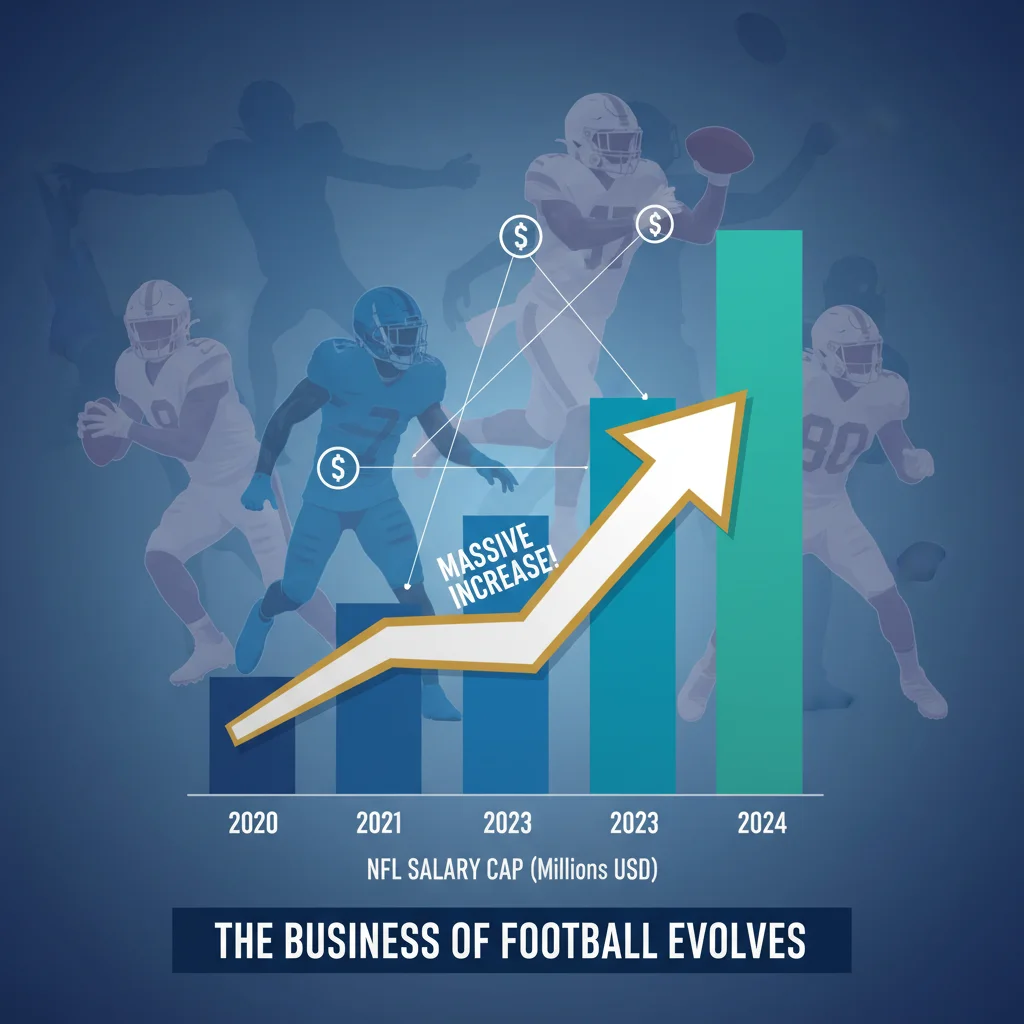
The recent NFL salary cap increase is set to reshape team building strategies across the league. This post breaks down what a 10% rise means for free agency, contract negotiations, and how teams can leverage these new financial realities to construct competitive rosters.
By: pedropadm2025@gmail.com on agosto 22, 2026
The National Football League (NFL) operates under a complex financial system, and one of its most critical components is the salary cap. This financial ceiling dictates how much money each team can spend on player salaries in a given year, directly influencing everything from drafting new talent to signing star free agents. Recently, the league announced a significant 10% NFL salary cap increase, a development that sends ripples throughout all 32 franchises. Understanding this rise is crucial for appreciating the strategic shifts teams will undertake.
This substantial boost to the salary cap means more flexibility and more money available for teams to spend. It’s not just about giving out bigger contracts; it’s about re-evaluating entire roster constructions, planning for future seasons, and making tough decisions about which players to keep and which to let go. For general managers and coaching staffs, this increase represents both an opportunity and a challenge, requiring astute financial management and a deep understanding of player value in a newly inflated market. We will delve into what this 10% increase truly signifies for the intricate world of NFL team building strategies.
The Immediate Impact on Free Agency and Player Contracts
The immediate and most visible consequence of an NFL salary cap increase is felt directly in the free agency market. When teams suddenly have more money to spend, the bidding wars for top-tier talent intensify, and player contracts tend to escalate. This creates a dynamic environment where agents negotiate harder for their clients, knowing that teams possess greater financial bandwidth to meet higher demands. Players who might have been considered borderline starters or valuable role players in previous years could now command significantly larger deals, pushing the overall market value upwards across various positions.
Teams with ample cap space entering free agency are in an enviable position. They can aggressively pursue multiple key targets, potentially signing impact players who might have been out of their price range before the increase. Conversely, teams already tight against the cap will need to be even more creative, perhaps restructuring existing contracts or making difficult cuts to free up necessary funds. The 10% jump acts as a financial stimulus, empowering some teams to make bolder moves while forcing others to navigate a more expensive landscape with pre-existing fiscal constraints. This market shift truly redefines what constitutes a ‘fair’ contract in the eyes of both players and teams.
Furthermore, the increased cap allows teams to be more generous with guaranteed money, which is often a major sticking point in contract negotiations. Players prioritize security, and a higher cap enables teams to offer more upfront guarantees, making their offers more attractive. This also affects extensions for current players, as teams can now lock down their homegrown talent with long-term deals that reflect the new market value without crippling their future cap flexibility. It’s a delicate balance of rewarding performance and maintaining a sustainable financial structure, all influenced by this significant cap adjustment.
Restructuring Existing Deals and Managing Long-Term Cap Health
While the NFL salary cap increase opens doors for new signings, it also provides significant leverage for teams to manage their existing rosters more effectively, particularly through contract restructures. Restructuring typically involves converting base salary into a signing bonus, which can then be prorated over the life of the contract. This move immediately frees up cap space in the current year, allowing teams to become more active in free agency or to sign their own players to extensions. With a larger cap, the impact of these restructures can be even more pronounced, creating substantial breathing room.
However, restructures are not without their long-term implications. While they offer immediate relief, they also push cap charges into future years, creating what’s often referred to as ‘dead money’ if a player is released before their contract expires. A higher cap can make these future charges more manageable, as the overall cap ceiling will also be higher. This allows teams to take on more prorated money without feeling as constrained in subsequent seasons. It’s a strategic gamble, but one that many successful franchises employ to keep their core intact and remain competitive year after year, particularly with key veteran players.
Maintaining long-term cap health is paramount for sustained success in the NFL. The 10% increase doesn’t just grant a one-time spending spree; it changes the entire financial outlook for several years. Teams must project future cap figures and plan accordingly, ensuring they don’t mortgage their future for short-term gains. This involves careful consideration of player age, performance trajectory, and potential future contract demands. The goal is to create a roster that is both competitive now and sustainable for the future, a task made slightly easier but still complex by the elevated cap. Strategic use of restructures can be a powerful tool in this ongoing financial balancing act.
Draft Strategy Adjustments in a Higher Cap Environment
The NFL Draft remains a cornerstone of team building, providing a cost-controlled influx of young talent. With an NFL salary cap increase, the strategic approach to the draft can also see subtle yet significant adjustments. Teams might feel less pressure to find immediate starters at every position, especially if they can address some needs through a more robust free agency period. This could lead to drafting for long-term potential, taking more ‘project’ players, or even investing in positions that typically command higher salaries in the veteran market, knowing they have the cap space to retain them later.
Furthermore, the increased cap might influence how teams value draft picks themselves. Picks in the later rounds, particularly those used on players who might eventually develop into starters, become even more valuable due to their low rookie contract costs. Teams might be more willing to trade future picks or even current picks for veteran players if they have the cap space to absorb the veteran’s salary. The overall philosophy shifts from simply filling holes to optimizing value across the entire roster, blending expensive veteran talent with affordable rookie contracts.
Impact on Rookie Contracts
Rookie contracts remain fixed by the Collective Bargaining Agreement (CBA), meaning they are not directly impacted by the cap increase in terms of their initial value.
However, the higher cap makes it easier for teams to afford the larger contracts of top draft picks, especially quarterbacks, without immediate cap strain.
Teams can also afford to keep more of their drafted players on the roster for longer, as the financial squeeze to cut developing players might lessen.
This allows for more patience with player development, as the financial pressure to see immediate returns on draft capital is somewhat reduced.
In essence, a higher cap provides a buffer, allowing teams to be more flexible and less desperate in their draft decisions. They can afford to take calculated risks or prioritize players who fit their long-term vision, rather than being forced into drafting for immediate, cheap solutions due to cap constraints. This nuanced shift in draft strategy can have profound implications for the league’s competitive balance over time.
The Role of Extensions and Retaining Homegrown Talent
One of the most critical aspects of sustained success in the NFL is the ability to identify, develop, and retain homegrown talent. The recent NFL salary cap increase significantly impacts a team’s capacity to do just that, offering more financial flexibility when negotiating contract extensions with their own star players. Before the cap increase, teams often faced difficult choices, having to let go of valuable players simply because they couldn’t afford their market value. Now, with more money available, these decisions become less agonizing, allowing franchises to keep their core intact and build continuity.
When a team has an established player performing at a high level, securing an extension before they hit free agency is often the preferred strategy. This avoids the uncertainty and potential bidding wars of the open market. The higher cap empowers teams to offer competitive, long-term deals that reflect the player’s value and the rising market, often front-loading contracts or offering larger signing bonuses that can be spread out. This not only rewards loyalty but also sends a strong message to other players within the organization about the team’s commitment to its talent.
Moreover, the increased cap helps in managing the future financial landscape. By extending key players, teams can often structure deals that are cap-friendly in the initial years, providing flexibility for other roster moves. As the cap continues to rise in subsequent years, these extended contracts, while large, may become a smaller percentage of the overall cap, making them more manageable. This proactive approach to extensions is a hallmark of well-run organizations, and the elevated cap provides an even greater opportunity to execute this strategy effectively, ensuring that foundational players remain with the team for the foreseeable future, contributing to a stable and competitive environment.
Competitive Balance and Long-Term Strategic Planning
The NFL salary cap increase isn’t just about individual team budgets; it also has a profound effect on the league’s competitive balance and how teams approach long-term strategic planning. A significant cap jump can, in theory, help level the playing field, giving more teams the financial means to compete for top-tier talent. This is particularly beneficial for teams that may have been struggling financially or were in a rebuilding phase, as they now have more resources to accelerate their turnaround. The goal of the salary cap, after all, is to prevent a few wealthy teams from dominating by outspending everyone else, and a rising tide lifts all boats to some extent.
However, the impact on competitive balance isn’t always straightforward. Teams that were already well-managed and had significant cap space will now have an even greater advantage, as they can be more aggressive than ever. Those teams that were already in cap trouble might find themselves further behind if they can’t shed expensive contracts quickly enough to take advantage of the new landscape. Therefore, while the cap increase provides more overall spending power, the disparity in how teams manage their finances will still play a crucial role in who benefits most.
Key Considerations for Long-Term Planning
Future Cap Projections: Teams must anticipate continued cap growth and plan contracts that remain viable in an evolving financial environment.
Player Development Investment: More cap space allows for greater investment in coaching staff, facilities, and player support systems, fostering long-term talent development.
Strategic Use of Rollover Cap: Unused cap space can be rolled over to the next season, providing an additional layer of flexibility for future big signings or extensions.
Impact on Trade Market: Teams with ample cap room can absorb expensive contracts in trades, making them more attractive trade partners for teams looking to shed salary.
Ultimately, the 10% NFL salary cap increase forces every general manager and team owner to re-evaluate their entire long-term strategy. It’s an opportunity to solidify championship windows, accelerate rebuilds, and make bold moves that were previously impossible. The teams that best leverage this financial boon, through smart contract management, shrewd drafting, and strategic free agency acquisitions, will be the ones that ultimately find sustained success in the increasingly competitive NFL landscape.
Frequently Asked Questions
What is the NFL salary cap and how does it work?
The NFL salary cap is a limit on the total amount of money that each team can spend on player salaries for a given league year. It’s designed to promote competitive balance across the league. The cap is determined by a formula based on league revenues, as outlined in the Collective Bargaining Agreement (CBA).
How often does the NFL salary cap change?
The NFL salary cap is typically adjusted annually, with the new figure announced before the start of each league year, which usually begins in March. These adjustments are based on the league’s revenue growth or decline, as agreed upon by the NFL and the NFL Players Association (NFLPA).
What does ‘dead money’ mean in relation to the salary cap?
Dead money refers to salary cap charges for players who are no longer on a team’s roster. This usually occurs when a player is released or traded, but their signing bonus or guaranteed salary from previous years still counts against the team’s cap due to how contracts are structured and prorated.
Does a higher salary cap automatically mean bigger player contracts?
While a higher salary cap provides teams with more money to spend, it doesn’t automatically guarantee every player a bigger contract. However, it generally leads to an overall increase in player salaries, especially for top-tier free agents and players due for extensions, as the market value adjusts upwards.
How do teams create more cap space if they are over the limit?
Teams can create cap space through several methods, including restructuring existing player contracts (converting salary to signing bonus), releasing or trading players with high salaries, or extending contracts to spread out cap hits over more years. These moves require careful planning to avoid future cap issues.
The recent 10% NFL salary cap increase is more than just a number; it’s a significant financial shift that will redefine team building strategies across the league. This substantial boost provides teams with unprecedented flexibility, impacting everything from aggressive free agency pursuits to the careful management of long-term roster health. It empowers general managers to make bolder decisions, whether that involves securing high-profile free agents, extending core homegrown talent, or strategically navigating the NFL Draft with a greater financial cushion. The ripple effects will be felt for seasons to come, as teams adapt their financial models and player valuation metrics to this new economic reality.
For fans, this means an exciting period of heightened activity in the offseason, with potentially more significant player movement and dynamic contract negotiations. For team executives, it demands astute financial planning, a deep understanding of player markets, and a forward-thinking approach to roster construction. The ability to leverage this increased cap space effectively will undoubtedly separate the contenders from the pretenders. As the league continues to evolve financially, understanding these mechanisms provides invaluable insight into the strategic chess match played out by all 32 NFL franchises. The stage is set for a fascinating era of team building, driven by this pivotal cap adjustment.
Peter B holds a degree in Journalism and has 5 years of experience covering U.S. economic policy, labor markets, and financial news. He writes data-driven news content on topics like inflation, interest rates, and employment trends.