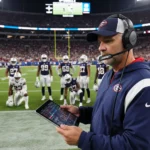
Explore the profound impact of NFL defensive analytics on modern football. This post delves into how advanced data analysis is reshaping defensive strategies, providing teams with a competitive edge and significantly boosting overall performance across the league.
By: pedropadm2025@gmail.com on agosto 22, 2026
The landscape of professional football is constantly evolving, and a major force behind this change is the increasing reliance on NFL defensive analytics. This advanced approach to data analysis is fundamentally reshaping how teams develop and execute their defensive strategies, leading to a noticeable uplift in overall team performance. Gone are the days when gut feelings and traditional scouting reports were the sole pillars of defensive planning; today, sophisticated algorithms and vast datasets provide insights that were once unimaginable.
Coaches and analysts are now diving deep into every aspect of the game, from individual player movements to opponent tendencies, all to gain a crucial competitive edge. This shift isn’t just about collecting more data; it’s about interpreting that data to make smarter, more informed decisions on the field. The result is a more dynamic, adaptable, and ultimately more effective defensive unit, contributing significantly to the modern NFL’s strategic depth and excitement.
The Rise of Data-Driven Defensive Schemes
The integration of data science into NFL defensive schemes marks a significant paradigm shift in how teams prepare and play. Historically, defensive strategy relied heavily on film study, coaching experience, and player intuition. While these elements remain vital, they are now augmented, and in some cases, redefined by quantitative insights. Teams are employing dedicated analytics departments, staffed with statisticians and data scientists, whose primary role is to dissect game film and player performance metrics in unprecedented detail. This move allows for a more objective evaluation of strengths, weaknesses, and potential opportunities against opposing offenses.
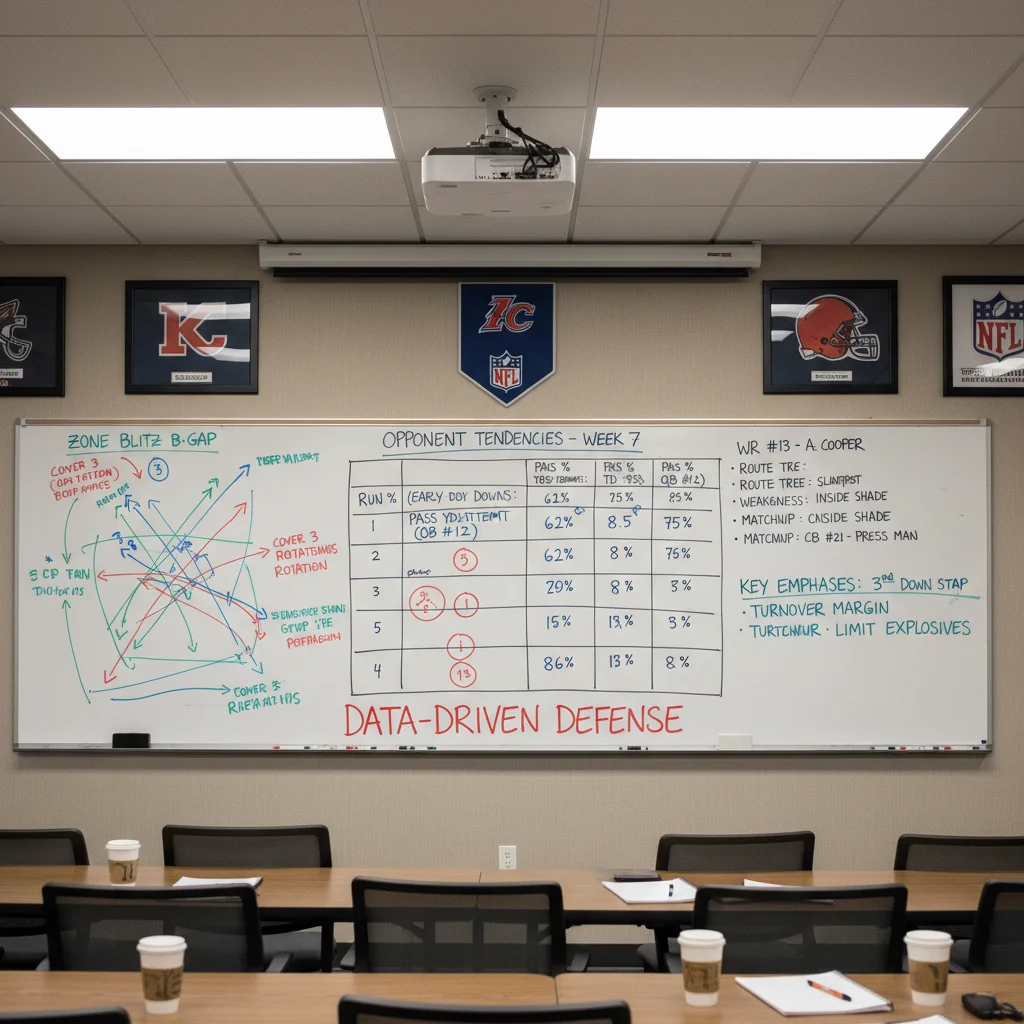
For example, instead of simply knowing an opponent prefers to run on first down, analytics can pinpoint the exact down-and-distance scenarios, personnel groupings, field positions, and even the specific linemen or backs involved that make a run play most likely and most successful. This level of granular detail empowers defensive coordinators to tailor their play calls with remarkable precision. The ability to predict offensive tendencies with higher accuracy means defenses can position players more effectively, disguise coverages more convincingly, and ultimately disrupt plays before they even fully develop, leading to more turnovers and fewer scoring opportunities for the opposition. This data-driven approach is truly revolutionizing the strategic chess match on the gridiron.
Leveraging Player Tracking and Biometric Data
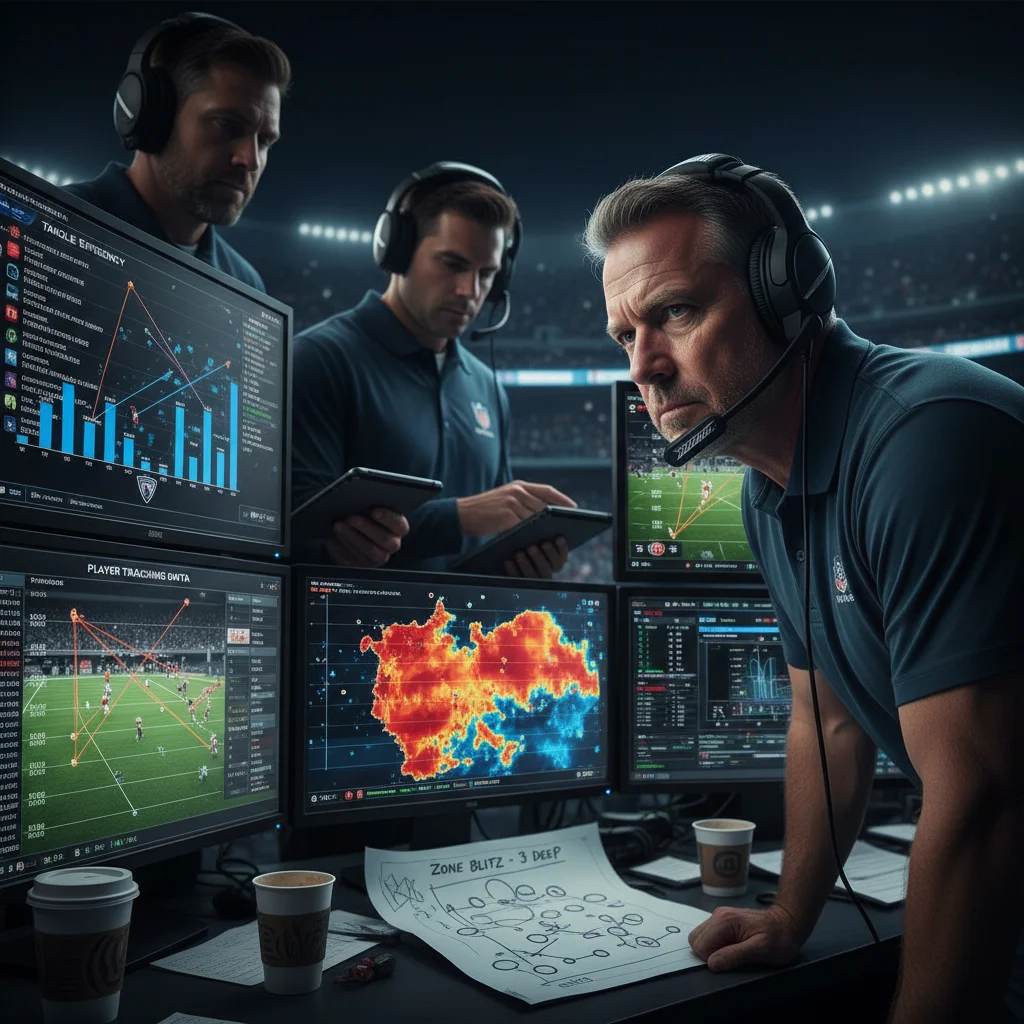
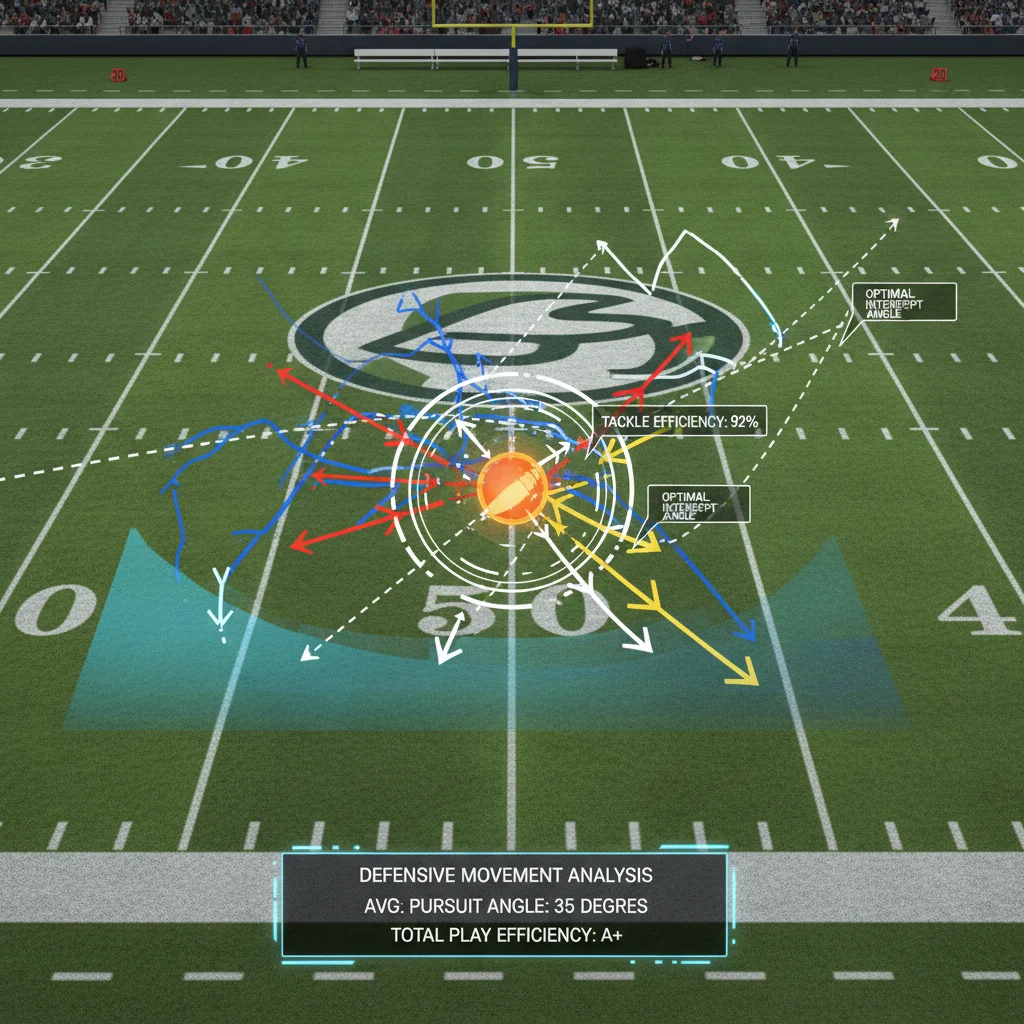
Beyond traditional game film, player tracking and biometric data have become invaluable tools in the arsenal of NFL defensive analytics. Systems like NFL’s Next Gen Stats capture every movement on the field, providing a wealth of information about player speed, acceleration, deceleration, distance covered, and even routes run. This data isn’t just for highlight reels; it offers profound insights into player performance, fatigue levels, and even injury risk. Defensive coordinators can analyze pursuit angles, reaction times, and coverage efficiency for every single defensive snap, identifying areas for improvement that might be invisible to the naked eye.
Biometric data, though often more private, also plays a role in optimizing defensive performance. Wearable technology can monitor heart rate, sleep patterns, and other physiological markers, allowing teams to manage player workloads more effectively. This helps prevent overtraining, reduces the likelihood of soft-tissue injuries, and ensures players are in peak physical condition on game day. By combining these advanced metrics, teams can build more resilient, efficient, and strategically sound defensive units. The meticulous collection and analysis of this data ensure that every defensive player is performing at their optimal level, contributing to a more robust and responsive defense.
Strategic Advantages from Predictive Analytics
Predictive analytics stands as a cornerstone of modern NFL defensive analytics, offering teams a forward-looking perspective on opponent tendencies and potential play calls. This goes beyond simply understanding what an opponent has done in the past; it involves building sophisticated models to forecast what they are likely to do in specific game situations. By analyzing vast datasets of historical plays, down-and-distance statistics, personnel groupings, and even coaching styles, analytical models can assign probabilities to various offensive actions, from pass versus run to specific route concepts or blitz pickups.
This capability provides defensive coordinators with a significant strategic advantage. Imagine knowing, with a high degree of confidence, that an opponent has a 70% chance of running a play-action pass from a certain formation on third-and-short. Such insights allow defenses to adjust their personnel, call specific coverages, or even execute timely blitzes with a much higher success rate. It’s about minimizing uncertainty and maximizing the chances of disrupting offensive rhythm. The goal is to be one step ahead, forcing offenses into less favorable situations and increasing the likelihood of turnovers or sacks. This proactive approach to defense is a direct result of sophisticated predictive analytics.
Key Predictive Analytics Applications:
Opponent Tendency Forecasting: Predicting play calls based on down, distance, field position, and personnel.
Matchup Exploitation: Identifying weak links in offensive lines or coverage mismatches to target with blitzes or coverage schemes.
Game Flow Prediction: Anticipating shifts in offensive strategy based on score, time remaining, and momentum.
Situational Awareness: Providing real-time probabilities for various offensive plays in critical moments.
Personnel Grouping Analysis: Understanding how different offensive personnel sets correlate with specific play designs.
These applications allow defensive units to be more adaptive and less reactive, leading to a more dominant presence on the field. The precision offered by predictive models means that defensive strategies are no longer based purely on instinct but are firmly grounded in empirical evidence, giving teams a measurable edge.
Impact on Defensive Player Development and Scouting
The influence of NFL defensive analytics extends far beyond game-day strategy, deeply impacting player development and scouting processes. In scouting, analytics provides a more objective lens through which to evaluate prospective talent. Instead of relying solely on traditional measurables and subjective film review, teams can analyze a player’s college performance through an analytical framework, looking at metrics like tackle efficiency, coverage success rates against various routes, or pressure rates for pass rushers. This helps identify undervalued players who might not fit the traditional mold but possess elite analytical profiles, or conversely, highlight red flags in highly touted prospects.
For player development, analytics offers personalized insights that help coaches tailor training programs. For a defensive back, data might reveal a consistent weakness in defending specific route combinations, allowing coaches to focus drills on those areas. For a pass rusher, analytics could pinpoint inefficiencies in their pass-rushing moves or reveal ideal angles of attack against different offensive linemen. This individualized feedback accelerates player growth and helps optimize their on-field performance. It transforms player development from a generalized approach to a highly specific, data-driven methodology, ensuring every player reaches their full potential and contributes maximally to the defensive unit’s success.
The Future Landscape of NFL Defensive Analytics
The integration of NFL defensive analytics is far from complete; the future promises even more sophisticated applications and deeper insights that will continue to reshape the game. One major area of growth is the further refinement of real-time analytics. Imagine defensive coordinators receiving instant, AI-generated suggestions for play calls based on live data streams from the field, including player fatigue, opponent formation, and even historical success rates against specific offensive coordinators. This would allow for unprecedented in-game adjustments, making defenses even more dynamic and responsive to offensive schemes.
Furthermore, advancements in machine learning and artificial intelligence will enable the identification of subtle patterns and correlations that are currently beyond human comprehension. This could lead to the development of entirely new defensive concepts or the ability to predict offensive plays with near-perfect accuracy. The ethical implications and competitive balance considerations of such advanced tools will undoubtedly be a topic of discussion, but the technological momentum is undeniable. We can also expect analytics to play an even greater role in injury prevention and player longevity, optimizing training regimens and recovery protocols based on predictive models. The ongoing evolution of NFL defensive analytics will ensure that the strategic arms race between offense and defense remains one of the most compelling aspects of professional football.
The continuous push for innovation means that defenses will always be seeking new ways to gain an edge, making the game more complex and fascinating for fans and analysts alike. This ever-evolving landscape ensures that the strategic aspects of football remain at the forefront.
Frequently Asked Questions
What exactly is NFL defensive analytics?
NFL defensive analytics involves using advanced statistical methods and data science to analyze player performance, opponent tendencies, and game situations to inform and optimize defensive strategies, play calls, and player development.
How do analytics help with defensive play-calling?
Analytics provide coaches with data-driven insights into opponent tendencies based on down, distance, field position, and personnel. This allows them to make more informed decisions, predict offensive plays with higher accuracy, and call defensive schemes that exploit identified weaknesses.
Do all NFL teams use defensive analytics?
While the degree of adoption varies, most, if not all, NFL teams now employ some form of defensive analytics. Teams are increasingly investing in dedicated analytics departments to gain a competitive edge in a highly strategic league.
What kind of data is used in defensive analytics?
Defensive analytics utilizes a wide range of data, including player tracking data (speed, distance, acceleration), historical play-by-play data, film breakdowns, biometric data, and advanced statistical metrics on individual and team performance.
How does analytics impact player development on defense?
Analytics offers personalized feedback for players, highlighting specific areas for improvement in their technique, coverage, or pursuit. It helps coaches tailor training regimens to address individual weaknesses and maximize strengths, leading to more efficient player growth.
The transformative power of NFL defensive analytics is undeniable, fundamentally altering how professional football teams approach their strategies and player development. By harnessing vast amounts of data and employing sophisticated analytical techniques, defenses are no longer relying solely on intuition but are making data-driven decisions that lead to measurable improvements in performance. From predictive play-calling to optimized player tracking and personalized training, analytics provides a critical edge in a league where every yard and every down matters. This ongoing evolution ensures a more strategic, dynamic, and ultimately more exciting game for fans. As technology continues to advance, the role of analytics in shaping the future of NFL defense will only grow, pushing the boundaries of what’s possible on the gridiron and challenging teams to innovate constantly to stay ahead of the curve.
Peter B holds a degree in Journalism and has 5 years of experience covering U.S. economic policy, labor markets, and financial news. He writes data-driven news content on topics like inflation, interest rates, and employment trends.