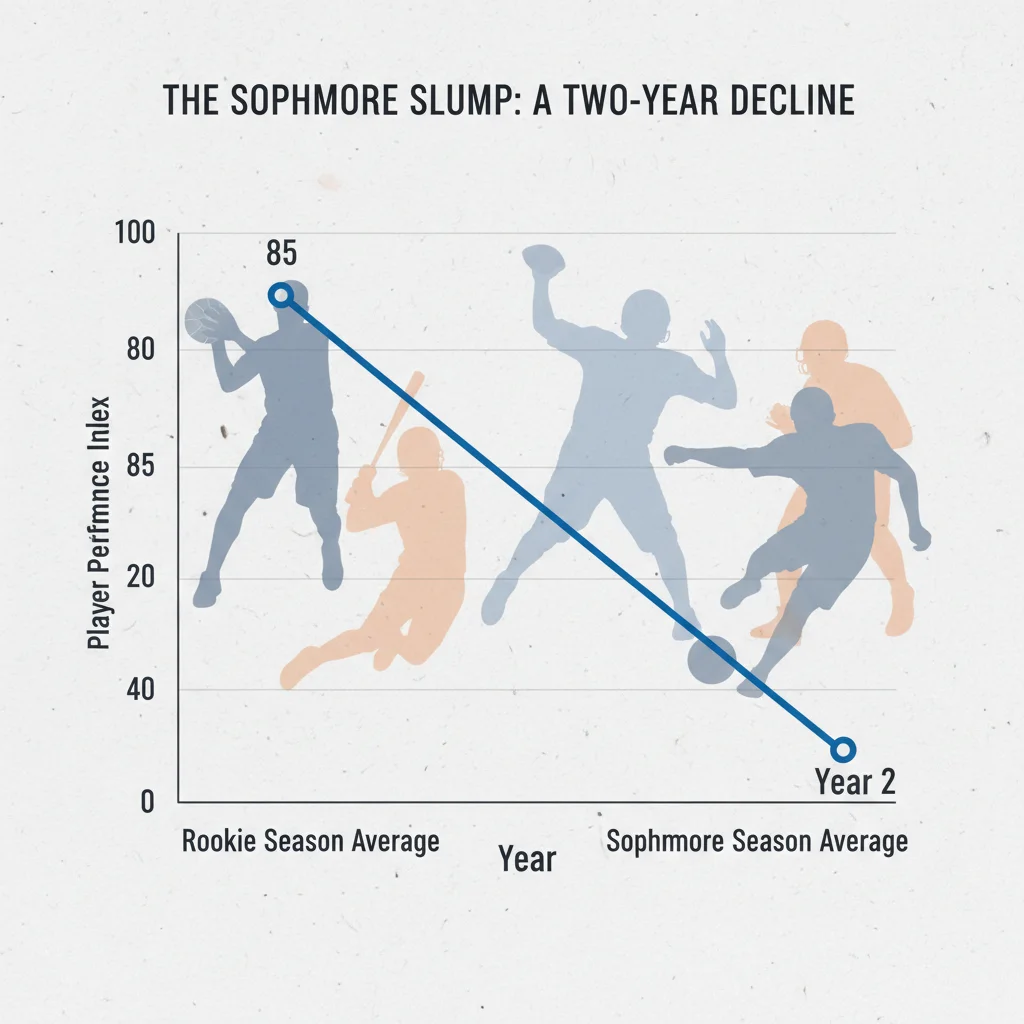
Many promising athletes experience a rookie performance drop in their second professional year. This article delves into the various factors contributing to this widespread phenomenon, including increased expectations, physical demands, and mental pressure. Understanding these challenges is crucial for both players and teams to navigate the sophomore slump successfully.
By: Michael Sete on agosto 22, 2026
The journey of a professional athlete is often filled with highs and lows, but one particularly puzzling trend is the common rookie performance drop observed in their second year. It’s a phenomenon that sees a significant number of promising newcomers struggle to maintain their initial impressive form. This isn’t just anecdotal; studies and observations across various sports indicate that a substantial percentage, sometimes as high as 70%, of rookies face considerable challenges after their breakout inaugural season.
This widespread sophomore slump raises important questions about player development, adaptation, and the unique pressures of professional sports. Understanding why this happens is crucial for athletes, coaches, and teams alike. It involves a complex interplay of physical, mental, and environmental factors that can derail even the most talented individuals. By dissecting these elements, we can gain better insights into how to support young athletes through this critical developmental phase.
Increased Expectations and Scrutiny
After a successful rookie season, players often find themselves under a much brighter spotlight. Their initial performance sets a new standard, creating elevated expectations from fans, media, coaches, and even themselves. This heightened scrutiny can be a double-edged sword. While positive attention can be motivating, the constant pressure to replicate or surpass their rookie numbers can become overwhelming.
Opposing teams also play a significant role here. Rookies often benefit from an element of surprise; opponents haven’t had much film to study or experience playing against them. By the second year, scouting reports are detailed, and defensive strategies are specifically tailored to exploit their weaknesses. This means players can no longer rely on raw talent alone; they must adapt and evolve their game, which is a demanding task. The mental toll of knowing every move is being analyzed and counteracted can be immense, leading to hesitation or overthinking during critical moments on the field or court.
Furthermore, the media narrative surrounding a second-year player can quickly shift. A few less-than-stellar performances can lead to headlines questioning their potential, adding another layer of external pressure. This constant public evaluation makes it difficult for young athletes to simply focus on their game and development. They are not just competing against opponents; they are also battling the narrative being built around them.
The Physical Toll and Injury Risks
Professional sports demand an incredible physical commitment, and the transition from college or amateur play to a full professional schedule can be brutal. Rookie seasons are often characterized by a surge of adrenaline and novelty, which can mask the true physical demands. However, by the second year, the cumulative fatigue from an extended season, rigorous training camps, and often a shorter off-season begins to take its toll. Bodies that are still developing or adjusting to the professional grind can start to show signs of wear and tear.
This increased physical stress often translates into a higher susceptibility to injuries. Minor aches and pains that were ignored or played through in the rookie year can become chronic issues. More severe injuries can occur as players push their bodies to maintain performance levels while facing greater physical resistance from opponents. Missing games due to injury not only impacts performance but also disrupts rhythm and confidence, making it harder to return to form. The pressure to perform can also lead to players returning from injury too soon, exacerbating existing problems or creating new ones.
Moreover, the intensity of competition doesn’t wane. Opponents are stronger, faster, and more experienced. The physical battles become more frequent and more demanding, requiring a higher level of sustained physical conditioning. Without proper recovery and strength building, a player’s physical capabilities can diminish, directly contributing to a rookie performance drop.
Mental Fatigue and Burnout
Beyond the physical challenges, the mental aspect of the second year is equally, if not more, critical. The relentless schedule, constant travel, and the immense pressure to perform can lead to significant mental fatigue and even burnout. Rookies often enter their first season with boundless enthusiasm and energy, fueled by the realization of a lifelong dream. By their second year, the grind of professional life becomes more apparent, and the initial excitement can give way to exhaustion.
This mental fatigue can manifest in several ways:
Decreased Motivation: The novelty wears off, and the daily routine can feel monotonous, making it harder to stay motivated for practices and games.
Reduced Focus: Sustaining high levels of concentration over an entire season becomes more challenging, leading to mistakes or lapses in judgment.
Increased Stress and Anxiety: The pressure to perform, coupled with external criticism, can lead to heightened stress, anxiety, and even depression in some cases.
Loss of Enjoyment: The sheer joy of playing the game can diminish when it becomes a job with immense pressure and scrutiny.
Navigating these mental hurdles requires strong coping mechanisms and support systems. Without them, a player’s mental state can severely impact their on-field or on-court performance, contributing significantly to the observed sophomore slump. The mental game is just as vital as the physical game, and often, it’s the one that gets overlooked until problems arise.
Adjusting to Scheme and Role Changes
Another often overlooked factor contributing to the rookie performance drop is the potential for changes in team schemes or a player’s role. A rookie might have excelled in their first year within a specific system or with a particular set of responsibilities. However, coaching changes, new teammates, or strategic adjustments made by the team can alter a player’s position, responsibilities, or the overall offensive/defensive scheme. These changes require adaptation, which can be challenging and time-consuming.
Sometimes, a rookie’s success might have been partly due to a specific role they filled, perhaps as a secondary option or a situational player. In their second year, they might be expected to take on a more prominent role, become a primary scorer, or be a defensive anchor. These increased responsibilities come with added pressure and require a different skill set and mindset. Players might struggle to adjust to these new demands, leading to a dip in their statistical output or overall effectiveness.
Furthermore, teams might experiment with different lineups or strategies, especially if the team itself is struggling. This instability can make it difficult for a second-year player to find their rhythm and consistently perform at a high level. They might feel like they are constantly trying to prove themselves in different capacities, rather than settling into a comfortable and productive role. This constant state of flux can be disorienting and detrimental to sustained performance.
The Importance of Adaptation and Development
Ultimately, overcoming the sophomore slump hinges on a player’s ability to adapt and continue developing their skills. Professional sports are a continuous evolution, and players who succeed long-term are those who can identify their weaknesses, refine their strengths, and adjust to the ever-changing landscape of competition. The second year is often a rude awakening, highlighting areas where a player needs to improve beyond their initial raw talent. This includes technical skills, strategic understanding, and physical conditioning.
Successful adaptation involves a proactive approach to learning and growth. Players need to work closely with coaches to analyze film, identify areas for improvement, and develop specific training regimens. It also means being open to constructive criticism and willing to put in the extra effort to expand their game. For instance, a player known for their shooting might need to develop a better defensive game, or a strong defender might need to improve their offensive consistency. This continuous self-improvement is what separates those who have a short burst of success from those who build lasting careers.
Beyond skill development, mental resilience is paramount. Learning to manage pressure, handle criticism, and maintain a positive mindset through adversity are crucial life skills that directly impact on-field performance. Teams and support staff play a vital role in providing resources like sports psychologists, mentors, and strength and conditioning coaches to help players navigate these complex challenges. The second year is not just about playing; it’s about growing into a more complete and resilient professional athlete.
Frequently Asked Questions
What is the sophomore slump in sports?
The sophomore slump refers to the common phenomenon where athletes experience a noticeable decline in performance during their second professional season compared to their rookie year. This can be due to a combination of physical, mental, and environmental factors.
Why do so many rookies struggle in their second year?
Many rookies struggle in their second year due to increased expectations, heightened scrutiny from opponents and media, cumulative physical fatigue, mental burnout, and the need to adapt to potential changes in team roles or schemes.
How can athletes overcome the second-year slump?
Athletes can overcome the slump by focusing on continuous skill development, improving mental resilience, seeking support from coaches and sports psychologists, maintaining physical conditioning, and adapting to new team dynamics and expectations.
Is the rookie performance drop exclusive to certain sports?
No, the rookie performance drop, or sophomore slump, is observed across various professional sports, including basketball, football, baseball, and hockey. The specific reasons might vary slightly by sport, but the underlying psychological and physical pressures are universal.
What role do coaches play in preventing the sophomore slump?
Coaches play a crucial role by managing expectations, providing consistent feedback, developing personalized training plans, offering mental support, and helping players adapt to evolving roles within the team. Their guidance is essential for fostering sustained growth.
The rookie performance drop is a well-documented and complex challenge facing a significant majority of young athletes entering their second professional season. It’s not a sign of a lack of talent or dedication, but rather a reflection of the immense pressures and adjustments inherent in elite-level sports. From the weight of increased expectations and the physical toll of a demanding schedule to the mental battles of fatigue and burnout, many factors converge to create the infamous sophomore slump.
However, understanding these challenges is the first step toward overcoming them. For athletes, it emphasizes the critical need for continuous skill development, mental fortitude, and a strong support network. For coaches and organizations, it highlights the importance of tailored development programs, psychological support, and realistic expectation management. By proactively addressing these issues, we can help more promising young players navigate their second year successfully and build long, impactful careers. The journey through professional sports is a marathon, not a sprint, and the second year is often the true test of an athlete’s resilience and commitment to long-term growth.